
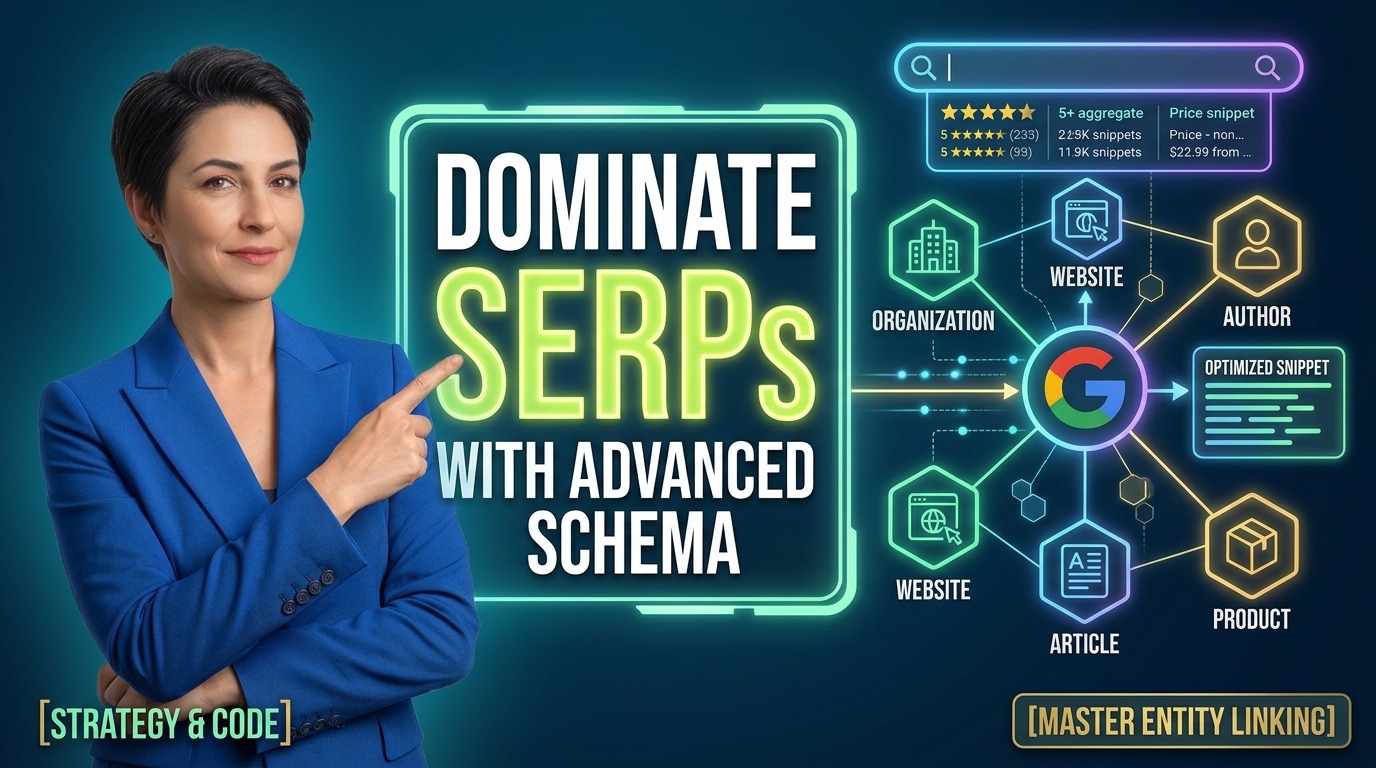
Adding basic Article or LocalBusiness structured data to a website used to be enough to secure a rich snippet and stand out on Search Engine Result Pages (SERPs). Today, basic schema is simply the price of entry.
As search engines shift toward semantic search, entity-based indexing, and AI-driven answer engines, standard structured data implementations no longer provide a competitive advantage. Search engines do not merely read your content; they build a structured Knowledge Graph to understand how your brand, products, authors, and services interconnect with real-world entities.
To dominate modern SERPs, technical SEOs and content strategists must move beyond standalone code snippets. You need advanced structured data architectures—utilizing multi-type entity nesting, global @graph arrays, external database entity linking, and dynamic JSON-LD injection.
This comprehensive guide provides an enterprise-level roadmap for architecting, scaling, and debugging advanced schema markup to build domain authority, secure visual rich features, and maximize organic click-through rates (CTR).
The Evolution of Structured Data: From Snippets to Knowledge Graphs
Structured data is a standardized format (using Schema.org vocabulary) for providing explicit information about a page and classifying its content. While early implementations focused on winning superficial visual enhancements (like review stars or recipe cook times), advanced schema serves a far more strategic purpose: Entity Disambiguation.
       ┌────────────────────────────────────────────────────────┐
       │             ADVANCED SCHEMA ARCHITECTURE               │
       └────────────────────────────────────────────────────────┘
                                   │
      ┌────────────────────────────┼────────────────────────────┐
      ▼                            ▼                            ▼
┌───────────┐                ┌───────────┐                ┌───────────┐
│ ENTITY    │                │ MULTI-TYPE│                │ DYNAMIC   │
│ LINKING   │                │ NESTING   │                │ INJECTION │
├───────────┤                ├───────────┤                ├───────────┤
│ Connect to│                │ `@graph`  │                │ GTM & API │
│ Wikidata &│                │ Global    │                │ Automation│
│ Wikipedia │                │ Arrays    │                │ Pipelines │
└───────────┘                └───────────┘                └───────────┘
When a search engine crawls a page discussing “Apple,” it must determine whether the document refers to the fruit, the technology corporation, or the record label. Advanced schema uses unique entity URIs (@id) and authority links (sameAs) to define exact entity relationships explicitly.
| Schema Capability | Basic Implementation | Advanced Enterprise Implementation |
| Format | Isolated microdata or basic JSON-LD | Connected @graph JSON-LD arrays |
| Entity Mapping | Single node per page (e.g., Article) |
Interlinked nodes (Organization + Author + Product + ItemPage) |
| Disambiguation | Plain text string naming (e.g., "author": "John Smith") |
Authority URIs (sameAs: Wikidata, Wikipedia, LinkedIn) |
| Deployment | Static manual HTML updates | Dynamic API injection via Tag Managers or Headless CMS |
| Primary Goal | Basic SERP rich snippet enhancement | Entity Graph building, AI engine inclusion, and brand authority |
Key Takeaway
Advanced schema markup is not just about visual rich snippets; it is the primary language used to explain your brand’s entities, relationships, and topical authority to semantic search algorithms.
Pillar 1: Architecting Global Connected @graph Arrays
The most common mistake in structured data is declaring multiple isolated <script type="application/ld+json"> blocks on a single page. When search engines encounter disconnected blocks for Organization, WebPage, BreadcrumbList, and Article, they treat them as separate, unrelated entities.
Advanced schema unifies every entity on a page into a single, cohesive entity graph using the @graph array and unique @id anchors.
┌──────────────────────────────────────────────────────────────────────────┐
│                      UNIFIED `@graph` ENTITY MAP                         │
└──────────────────────────────────────────────────────────────────────────┘
                                     │
 ┌─────────────────────────┐         │         ┌───────────────────────────┐
 │   ORGANIZATION NODE     │         │         │      WEBSITE NODE         │
 │ `@id`: example.com/#org │─────────┼────────>│ `@id`: example.com/#site  │
 └────────────┬────────────┘         │         └─────────────┬─────────────┘
              │                      │                       │
              ▼                      ▼                       ▼
 ┌─────────────────────────┐               ┌───────────────────────────┐
 │       AUTHOR NODE       │               │       ARTICLE NODE        │
 │ `@id`: example.com/#person│────────────>│ `@id`: example.com/#article│
 └─────────────────────────┘               └───────────────────────────┘
The Connected JSON-LD @graph Architecture
Below is a production-ready template demonstrating how an enterprise article page links its publishing organization, website, author, breadcrumbs, and primary content into a unified graph:
JSON
{
  "@context": "https://schema.org",
  "@graph": [
    {
      "@type": "Organization",
      "@id": "https://www.example.com/#organization",
      "name": "Enterprise SEO Global",
      "url": "https://www.example.com",
      "logo": {
        "@type": "ImageObject",
        "@id": "https://www.example.com/#logo",
        "url": "https://www.example.com/assets/logo.png",
        "caption": "Enterprise SEO Global Logo"
      },
      "sameAs": [
        "https://www.wikidata.org/wiki/Q12345678",
        "https://en.wikipedia.org/wiki/Enterprise_SEO_Global",
        "https://www.linkedin.com/company/enterprise-seo-global"
      ]
    },
    {
      "@type": "WebSite",
      "@id": "https://www.example.com/#website",
      "url": "https://www.example.com",
      "name": "Enterprise SEO Global Insights",
      "publisher": { "@id": "https://www.example.com/#organization" }
    },
    {
      "@type": "Person",
      "@id": "https://www.example.com/authors/john-smith/#person",
      "name": "John Smith",
      "jobTitle": "Lead Technical SEO Architect",
      "worksFor": { "@id": "https://www.example.com/#organization" },
      "sameAs": [
        "https://www.wikidata.org/wiki/Q87654321",
        "https://www.linkedin.com/in/johnsmith-seo"
      ]
    },
    {
      "@type": "TechArticle",
      "@id": "https://www.example.com/advanced-schema-guide/#article",
      "isPartOf": { "@id": "https://www.example.com/#website" },
      "headline": "Advanced Schema Markup Strategies to Dominate SERPs",
      "description": "A deep dive into entity linking, multi-type nesting, and JSON-LD graph architecture.",
      "inLanguage": "en-US",
      "mainEntityOfPage": "https://www.example.com/advanced-schema-guide/",
      "author": { "@id": "https://www.example.com/authors/john-smith/#person" },
      "publisher": { "@id": "https://www.example.com/#organization" },
      "datePublished": "2026-01-15T08:00:00+00:00",
      "dateModified": "2026-10-22T10:30:00+00:00"
    }
  ]
}
Pro Tip: By assigning explicit
@idURIs (such as[https://www.example.com/#organization](https://www.example.com/#organization)), you allow secondary pages across your site to reference the same organization node without duplicating full metadata blocks.
Pillar 2: Entity Disambiguation via about, mentions, and sameAs
Search engine algorithms evaluate content based on topical depth and entity coverage. Simply writing about a complex topic is not enough; you must explicitly tell search engines which real-world entities your content covers.
Using about and mentions Arrays
Schema.org provides the about and mentions properties specifically for entity mapping:
-
about: Defines the primary subject matter of the document. -
mentions: Identifies secondary entities, concepts, tools, or brands referenced within the body content.
JSON
{
  "@type": "TechArticle",
  "@id": "https://www.example.com/cloud-migration-guide/#article",
  "headline": "Enterprise Cloud Database Migration Blueprint",
  "about": [
    {
      "@type": "Thing",
      "name": "Cloud Computing",
      "sameAs": "https://en.wikipedia.org/wiki/Cloud_computing"
    },
    {
      "@type": "Thing",
      "name": "Database Migration",
      "sameAs": "https://www.wikidata.org/wiki/Q5227341"
    }
  ],
  "mentions": [
    {
      "@type": "Organization",
      "name": "Amazon Web Services",
      "sameAs": "https://www.wikidata.org/wiki/Q456157"
    },
    {
      "@type": "SoftwareApplication",
      "name": "PostgreSQL",
      "sameAs": "https://www.wikidata.org/wiki/Q192490"
    }
  ]
}
Linking to Recognized Authority Databases
To perform entity disambiguation effectively, point the sameAs array directly to canonical knowledge repositories:
-
Wikidata (
wikidata.org): The structured data backbone for search engine knowledge vaults. Always prioritize Wikidata URIs over general web links. -
Wikipedia (
wikipedia.org): Excellent secondary reference for broad industry concepts, brands, and historical topics. -
Industry Registries: Use authoritative databases such as Crunchbase for companies, ORCID for academic researchers, or GitHub for developer profiles.
Pillar 3: High-Value Schema Implementations for High-Intent SERPs
To dominate competitive commercial and transactional queries, deploy specialized schema types engineered to unlock high-converting rich snippets.
       ┌────────────────────────────────────────────────────────┐
       │             HIGH-INTENT RICH FEATURE TYPES             │
       └────────────────────────────────────────────────────────┘
                                   │
      ┌────────────────────────────┼────────────────────────────┐
      ▼                            ▼                            ▼
┌───────────┐                ┌───────────┐                ┌───────────┐
│ E-COMME.  │                │ B2B SAAS  │                │ PUBLISHING│
│ PRODUCT   │                │ SOFTWARE  │                │ FAQ & HOW │
├───────────┤                ├───────────┤                ├───────────┤
│ Merchant  │                │ Software  │                │ FAQPage   │
│ Listings &│                │ App &     │                │ & HowTo   │
│ Offers    │                │ Aggregate │                │ Structured│
│ Price/Stock│               │ Rating    │                │ Modules   │
└───────────┘                └───────────┘                └───────────┘
1. E-Commerce Product & Merchant Return Policy Schema
For e-commerce platforms, basic Product markup is insufficient. To qualify for Google Merchant Center rich experiences, combine Product, Offer, AggregateRating, and MerchantReturnPolicy.
JSON
{
  "@type": "Product",
  "name": "Enterprise Cloud Router X500",
  "image": "https://www.example.com/images/router-x500.jpg",
  "sku": "CR-500-ENT",
  "mpn": "987654321",
  "brand": {
    "@type": "Brand",
    "name": "NetCorp"
  },
  "offers": {
    "@type": "Offer",
    "url": "https://www.example.com/products/router-x500",
    "priceCurrency": "USD",
    "price": "1299.99",
    "priceValidUntil": "2027-12-31",
    "itemCondition": "https://schema.org/NewCondition",
    "availability": "https://schema.org/InStock",
    "hasMerchantReturnPolicy": {
      "@type": "MerchantReturnPolicy",
      "applicableCountry": "US",
      "returnPolicyCategory": "https://schema.org/MerchantReturnFiniteReturnPeriod",
      "merchantReturnDays": 30,
      "returnMethod": "https://schema.org/ReturnByMail"
    }
  }
}
2. Software Application Schema for SaaS Platforms
B2B software platforms should utilize SoftwareApplication or WebApplication schema to display operating system compatibility, pricing tiers, and user rating stars directly in organic search results.
Example Application: A enterprise project management platform implements
WebApplicationschema specifyingoperatingSystem: "All",applicationCategory: "BusinessApplication", and offers structured pricing specs. In SERPs, search engines render the app rating score alongside direct subscription pricing snippets, driving qualified high-intent leads.
Pillar 4: Dynamic JSON-LD Injection & Automation Frameworks
In large-scale enterprise environments with dynamic content management systems, manually writing JSON-LD scripts for every page is impossible. You need scalable automation strategies.
┌──────────────────────────────────────────────────────────────────────────┐
│                   DYNAMIC SCHEMA INJECTION PIPELINE                      │
└──────────────────────────────────────────────────────────────────────────┘
                                     │
 ┌─────────────────────────┐         │         ┌───────────────────────────┐
 │   DATABASE / HEADLESS   │         │         │   DYNAMIC TEMPLATE ENGINE │
 │   CMS API               │─────────┼────────>│ (Node.js / Next.js /      │
 │ (Product/Article Data)  │         │         │  GTM Custom JavaScript)   │
 └─────────────────────────┘         │         └─────────────┬─────────────┘
                                     │                       │
                                     ▼                       ▼
                       ┌───────────────────────────┐
                       │ RENDERED JSON-LD `@graph` │
                       │ Injected directly into    │
                       │ HTML `<head>` DOM         │
                       └────────────────___________┘
Method A: Server-Side Injection in Modern Frameworks (Next.js / Nuxt.js)
The most reliable method for delivering structured data is injecting compiled JSON-LD directly into raw HTML during Server-Side Rendering (SSR) or Static Site Generation (SSG).
JavaScript
// Next.js App Router component injecting dynamic structured data
export default async function ArticlePage({ params }) {
const article = await getArticleData(params.slug);
const schemaGraph = {
'@context': 'https://schema.org',
'@graph': [
{
'@type': 'TechArticle',
'headline': article.title,
'datePublished': article.publishedAt,
'author': {
'@type': 'Person',
'name': article.author.name
}
}
]
};
return (
<>
<script
type="application/ld+json"
dangerouslySetInnerHTML={{ __html: JSON.stringify(schemaGraph) }}
/>
);
}
Method B: Dynamic Injection via Google Tag Manager (GTM)
When engineering resources are constrained, technical SEO teams can deploy JSON-LD dynamically using Google Tag Manager custom HTML variables.
Pro Tip: While client-side GTM injection works, server-side rendering is strongly preferred. If client-side JavaScript execution is delayed or fails, search engine crawlers may parse the page before the schema script executes.
Common Schema Implementation Pitfalls (And How to Fix Them)
Avoid these common technical errors that can lead to manual action warnings or lost rich snippet eligibility:
1. Schema-Content Mismatch (Spammy Structured Data)
-
The Error: Adding structured data for content that is invisible or absent in the user-facing HTML (e.g., declaring fake 5-star reviews or hidden FAQ items).
-
The Fix: Ensure every property declared in your JSON-LD payload corresponds to visible content on the page. Discrepancies can trigger Google Search Console Unspammy Structured Data manual actions.
2. Broken Image & Author Reference Links
-
The Error: Providing relative image paths (e.g.,
"logo": "/assets/logo.png") inside JSON-LD blocks. -
The Fix: Schema.org specifications require fully qualified, absolute URLs (e.g.,
"[https://www.example.com/assets/logo.png](https://www.example.com/assets/logo.png)").
3. Misusing @type Array Classifications
-
The Error: Using generic types like
ThingorWebPagewhen a more specific Schema.org subtype exists. -
The Fix: Always select the most specific available subtype. Replace generic
Articledeclarations withTechArticle,NewsArticle, orBlogPostingwhere applicable.
Technical Debugging & Validation Tools
Building robust schema requires continuous validation across development and deployment pipelines.
       ┌────────────────────────────────────────────────────────┐
       │             SCHEMA VALIDATION STACK                    │
       └────────────────────────────────────────────────────────┘
                                   │
      ┌────────────────────────────┼────────────────────────────┐
      ▼                            ▼                            ▼
┌───────────┐                ┌───────────┐                ┌───────────┐
│ SCHEMA.ORG│                │ GOOGLE    │                │ SEARCH    │
│ VALIDATOR │                │ RICH RESULTS│              │ CONSOLE   │
├───────────┤                ├───────────┤                ├───────────┤
│ Syntactic │                │ Google    │                │ Live      │
│ & Logic   │                │ Feature   │                │ Production│
│ Check     │                │ Eligibility│               │ Monitoring│
└───────────┘                └───────────┘                └───────────┘
-
Schema.org Validator (
validator.schema.org): Validates raw JSON-LD syntax against official Schema.org standards without Google-specific business rules. -
Google Rich Results Test (
[search.google.com/test/rich-results](https://search.google.com/test/rich-results)): Checks whether your structured data meets Google’s criteria for displaying SERP rich features. -
Google Search Console (Enhancements Tab): Monitors live production URLs across your entire domain, flagging schema errors, missing required fields, or formatting regressions automatically.
Frequently Asked Questions (FAQ)
Does schema markup directly improve search engine rankings?
Schema markup is not a direct algorithmic ranking factor by itself. However, it helps search engines understand your content’s context and entity relationships, unlocks visual rich snippets that boost Click-Through Rates (CTR), and ensures inclusion in semantic knowledge graphs.
Should I use JSON-LD or Microdata for enterprise schema implementation?
Google explicitly recommends JSON-LD. JSON-LD separates structural metadata from HTML markup, making it cleaner to maintain, faster to execute, and easier to automate at scale compared to Microdata or RDFa.
Can I include multiple @type values on a single entity?
Yes. Schema.org supports multi-type entities using array syntax. For example, a page can declare "@type": ["SoftwareApplication", "Product"] if an entity functions as both a downloadable application and a commercial product.
How long does it take for rich snippets to appear in SERPs after implementing schema?
Rich features typically appear within a few days to two weeks after Google re-crawls and re-indexes the page containing valid structured data. However, rich snippet rendering is algorithmic and depends on your site’s authority, quality, and search intent alignment.
Conclusion: Build Your Semantic Search Advantage
Advanced schema markup is far more than a decorative code snippet—it is a core architectural requirement for modern technical SEO.
By organizing your site’s structured data into unified @graph arrays, linking entities explicitly to authoritative Knowledge Base repositories, and automating deployment pipelines, you ensure search engines understand your site’s expertise, authority, and relevance.

I’m Md Nasir Uddin, a digital marketing consultant with over 9 years of experience helping businesses grow through strategic and data-driven marketing. As the founder of Macroter, my goal is to provide businesses with innovative solutions that lead to measurable results. Therefore, I’m passionate about staying ahead of industry trends and helping businesses thrive in the digital landscape. Let’s work together to take your marketing efforts to the next level.