
Content without optimization is just words on a page. Optimization without content is just a scorecard with nothing to score. In 2025, the tools that win are the ones that bridge both — combining AI-powered writing with real-time SEO intelligence so every piece you publish has a genuine chance of ranking.
The AI writing tools landscape has matured dramatically. We’ve moved far beyond generic content spinners and grammar checkers. Today’s best platforms analyze real SERP data, model NLP relationships the way Google’s algorithms do, generate content briefs from competitor analysis, score your content against top-ranking pages in real time, and help you build topical authority systematically across your entire content library.
But not all AI writing tools are built equally for SEO. Some are content generators with an SEO veneer. Others are powerful SEO optimization platforms with writing assistance bolted on. And a few genuinely integrate both at a level that changes how content teams work.
In this comprehensive guide, we review the 10 best AI writing tools for SEO optimization — covering Surfer SEO, Frase, Outranking, Scalenut, Jasper, Writesonic, SEO.ai, MarketMuse, WordLift, and Clearscope. Each tool is reviewed on its features, pricing, ideal use case, and honest limitations — so you can choose the right tool (or combination of tools) for your specific workflow.
How to Choose an AI Writing Tool for SEO
Before evaluating specific tools, it’s worth understanding the key criteria that separate genuinely useful AI SEO writing tools from those that disappoint in real workflows:
Real-Time SERP Analysis
The best tools analyze the actual pages ranking for your target keyword — not just a keyword database. SERP-grounded recommendations (word count targets, heading structures, semantic terms) are far more accurate than database-only suggestions because they reflect what Google is currently rewarding.
NLP and Semantic Optimization
Modern Google doesn’t just count keyword instances — it evaluates topical completeness, entity relationships, and semantic context. Tools that use NLP (Natural Language Processing) or entity-based analysis to identify missing concepts produce more relevant optimization guidance than simple keyword density checkers.
Content Brief Generation
Generating a detailed content brief from competitor analysis — headings to cover, questions to answer, entities to mention — saves hours of manual research per article. This is one of the highest-leverage features in any AI SEO writing tool.
AI Writing Quality
The AI writer must produce content that requires minimal editing to be publishable — not just plausible-sounding text that needs complete rewriting. The best tools produce well-structured, factually grounded first drafts.
Workflow Integration
Does the tool integrate with your CMS (WordPress, Webflow), your team’s collaboration workflow, or other SEO tools you use? Friction in the publishing pipeline kills productivity gains.
Pricing Relative to Use Case
The right price depends entirely on your usage. A solo blogger needs a different investment level than an agency producing 100 articles per month. Always evaluate cost relative to article output, not just monthly fee.
Our Search Engine Optimization services use several of the tools reviewed in this guide — matching the right platform to each client’s content volume, budget, and competitive landscape. And our SEO content writing services apply these tools as part of a human-expert-led workflow that produces content proven to rank.
1. Surfer SEO

Best for: Content teams prioritizing real-time on-page optimization and consistent SERP-aligned scoring
Starting price: $89/month (Essential) | Free trial: Yes | Rating: ⭐⭐⭐⭐½
Overview
Surfer SEO is the gold standard for real-time content optimization — and arguably the tool that shaped how the entire category works. At its core, Surfer analyzes hundreds of top-ranking pages for your target keyword and translates that analysis into a real-time content score as you write, telling you exactly which keywords to include, how many times, and how to structure your headings to align with what Google is already rewarding.
Surfer’s proven track record for improving search rankings, combined with its intuitive interface that requires minimal training, makes it the reliable choice for content teams prioritizing both effectiveness and ease of implementation.
Key Features
Content Editor with Real-Time Scoring — Surfer’s editor is its flagship feature. As you write, a live score (0–100) updates in real time, reflecting how well your content aligns with the top-ranking pages for your keyword. Green highlights indicate well-covered terms; yellow and red indicate gaps to fill. This score-as-you-write experience keeps writers in an optimization mindset throughout the drafting process.
NLP-Based Keyword Recommendations — Surfer uses Natural Language Processing to recommend not just target keywords but semantically related terms, entities, and phrases that the algorithm associates with comprehensive coverage of your topic. This moves optimization beyond keyword density into genuine topical completeness.
SERP Analyzer — deep analysis of the top-ranking pages for any keyword, revealing patterns in word count, heading structure, keyword usage, page speed, and more. Invaluable for understanding exactly what Google is rewarding before you write a single word.
Content Planner — generates topic clusters and content calendars organized around keyword groupings to help build topical authority systematically across your site.
AI Outline Generator — generates a structured heading hierarchy based on SERP analysis, giving writers a pre-researched blueprint rather than starting from a blank page.
Surfer AI — a full AI writer that generates SEO-optimized articles within the Surfer environment, incorporating live scoring to produce content that’s optimized from the first draft.
AI Tracker — monitors how your content appears in AI-powered search results (ChatGPT, Gemini, Perplexity) — a forward-looking feature for GEO (Generative Engine Optimization).
Jasper Integration — Surfer’s native integration with Jasper allows users to combine Jasper’s content generation quality with Surfer’s data-driven optimization, creating one of the most powerful combined workflows in the market.
Pricing
- Essential: $89/month — 200 articles/month, Content Editor, Keyword Research
- Scale: $129/month — 500 articles/month, AI Content Audit, API access
- Scale AI: $219/month — 500 articles/month + unlimited AI articles
- Enterprise: Custom
Annual billing saves approximately 17%.
Pros
- Most accurate real-time content scoring in the category
- SERP-grounded recommendations based on actual top-ranking pages
- Clean, intuitive interface requiring minimal onboarding
- Best-in-class Jasper integration for combined writing + optimization
- Excellent educational resources (Surfer Academy)
Cons
- AI Tracker is an add-on for lower-tier plans — not included by default
- Credit limits can feel restrictive for high-volume content teams
- Focuses on individual content optimization, not site-wide strategy
- Higher pricing compared to all-in-one alternatives like Scalenut
2. Frase
Best for: SEO content strategists and writers who need fast, automated content briefs and research
Starting price: $45/month | Free trial: 5-day trial for $1 | Rating: ⭐⭐⭐⭐☆
Overview
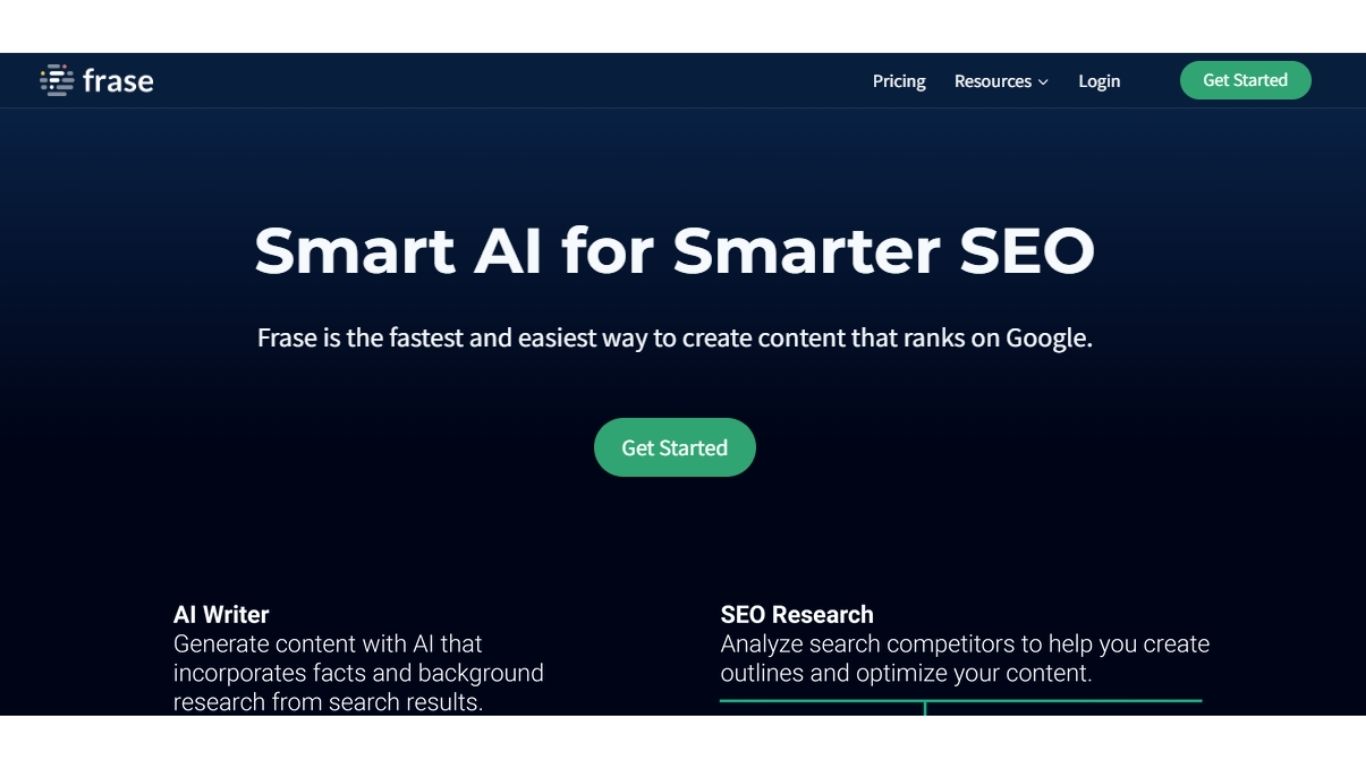
Frase delivers exceptional value by combining SERP research, AI writing, and content optimization in one streamlined platform. Where it distinguishes itself most clearly is in automated content brief generation — enter a keyword, and Frase analyzes the top search results to generate a detailed brief with suggested topics, headings, questions to answer, and competitor insights in seconds.
Frase is like having a research assistant who never sleeps. Its content editor provides a live score as you write, ensuring you cover all the right points. It’s especially popular with content teams and agencies who need to produce quality briefs at scale.
Key Features
Automated Content Brief Generation — Frase’s most-cited feature. A single keyword triggers analysis of the top SERP results, producing a structured brief with competitor headings, common questions from PAA (People Also Ask), average word counts, and entity recommendations. What manually takes 45–90 minutes happens in under 2 minutes.
Content Editor with Live Scoring — a real-time content score updates as you write, measuring how well your content covers the topics, headings, and entities found across top-ranking competitor pages.
AI Writing Assistant — generates full article drafts, section expansions, introductions, conclusions, and paragraph rewrites based on your keyword and brief. Quality is solid for first drafts; human editing is recommended for final output.
Question Research Tool — aggregates questions from Google’s People Also Ask, Reddit, Quora, and other sources — ideal for FAQ sections, conversational content, and targeting featured snippet opportunities.
Topic Scoring — Frase’s topic score compares your content against competitors and identifies specific missing topics — not just keywords but entire concepts your content needs to address.
Document Management — organize briefs, drafts, and final content in Frase’s built-in document system, with collaboration features for teams.
Pricing
- Solo: $15/month — 4 articles/month, 1 user
- Basic: $45/month — 30 articles/month, 1 user
- Team: $115/month — unlimited articles, 3 users
- AI writing add-on: $35/month for unlimited AI words
Pros
- Best-in-category automated content brief generation
- Exceptional value for the feature set at $45/month
- 5-day trial for $1 — genuinely low-risk entry point
- Question aggregation from multiple sources for FAQ and featured snippet targeting
- Fast from keyword to research-backed brief
Cons
- Keyword recommendations lack the precision of Surfer SEO or Clearscope
- AI-generated content often needs substantial human editing for quality
- SEO analysis capabilities are lighter than specialized optimization tools
- Solo plan limits (4 articles/month) may be too restrictive for active content producers
3. Outranking
Best for: Teams scaling content production who need an end-to-end workflow from keyword to published draft
Starting price: $29/month | Free trial: 7-day trial | Rating: ⭐⭐⭐⭐☆
Overview
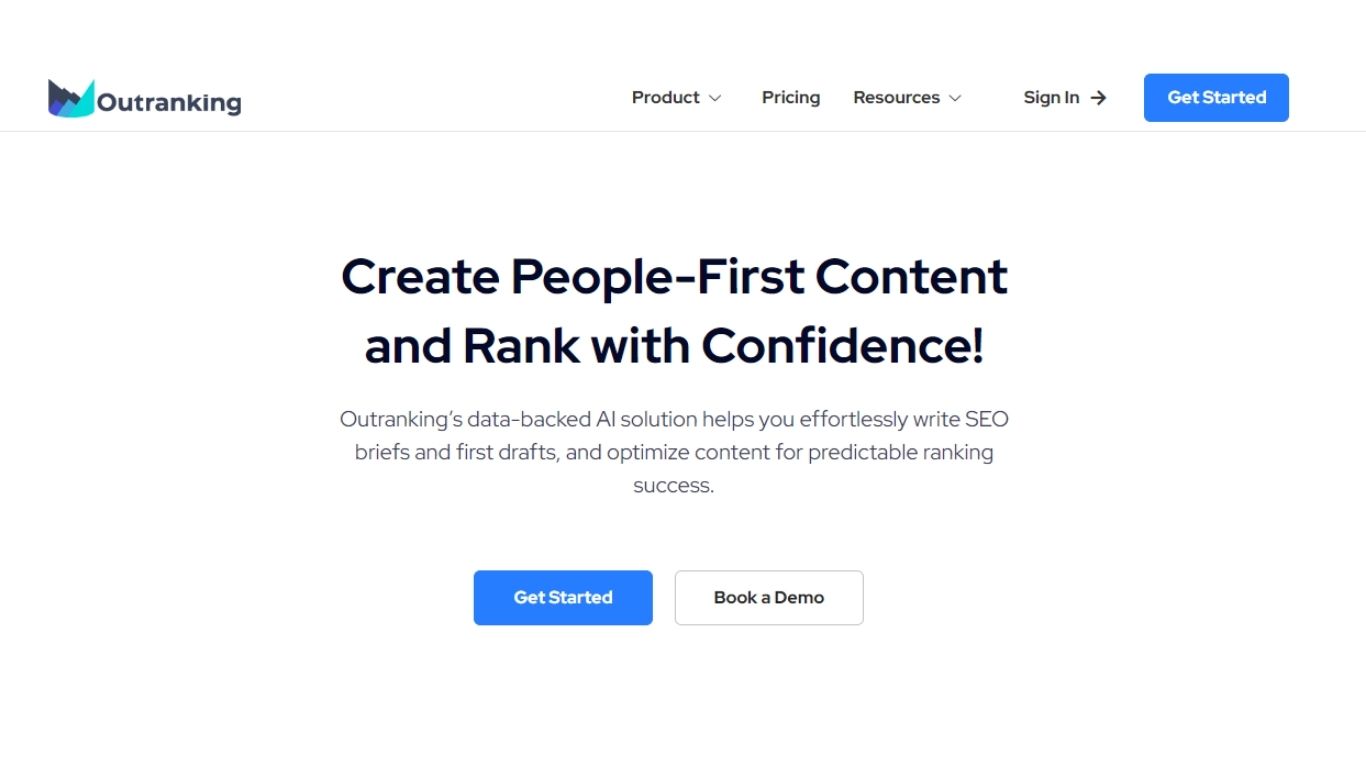
Outranking is an AI-powered SEO content platform designed for teams that need a complete, structured workflow — from initial keyword research through content brief generation, AI writing, and on-page optimization — in a single, cohesive system. Its emphasis on workflow automation makes it one of the best options for agencies and content teams producing at scale.
Outranking is an AI-powered SEO platform designed to enhance the content optimization workflow in a way that caters to the intricacies of SEO strategies. It provides workflow automation from keyword to draft — one of its most valued attributes.
Key Features
End-to-End Content Workflow — Outranking maps the complete content production lifecycle: keyword discovery → intent analysis → content brief → AI draft → optimization scoring → publishing. Each stage feeds the next, reducing context switching and manual coordination.
SERP-Grounded Content Briefs — content briefs are generated from real-time SERP analysis, covering competitor headings, key questions, NLP terms, and structural recommendations — all grounded in what’s currently ranking for your keyword.
AI Content Generation — the platform generates full first drafts based on the brief, incorporating target keywords, NLP terms, and structural elements identified in the research phase.
Content Scoring and Optimization — a real-time content score measures alignment with SERP data, with specific recommendations for missing keywords, heading gaps, and structural improvements.
On-Page SEO Optimization — beyond content, Outranking helps optimize technical on-page elements: title tags, meta descriptions, URL structure, and schema markup recommendations.
Content Update Workflow — for existing content that’s underperforming, Outranking’s optimization audit identifies what’s missing and guides updates — a significant feature for teams managing large content libraries.
Team Collaboration — project management, shared workflows, and commenting features for agency and in-house team coordination.
Pricing
- Starter: $29/month — 5 AI-optimized articles, basic features
- Solo: $79/month — 15 articles, full features
- Pro: $159/month — 30 articles, team features
- Company: $299+/month — agency scale, custom volume
Pros
- Most complete end-to-end workflow from keyword to published draft
- Competitive entry pricing at $29/month
- Strong brief generation with deep SERP grounding
- Content update workflow for existing content optimization
- Good team collaboration features for agencies
Cons
- Article limits on lower plans can be restrictive for high-volume teams
- Interface has more complexity than single-purpose tools
- AI writing quality, while solid, benefits from human editorial polish
4. Scalenut
Best for: Content marketers and agencies who want one platform for the entire content lifecycle at a competitive price
Starting price: $37/month | Free trial: 7-day free trial | Rating: ⭐⭐⭐⭐½
Overview
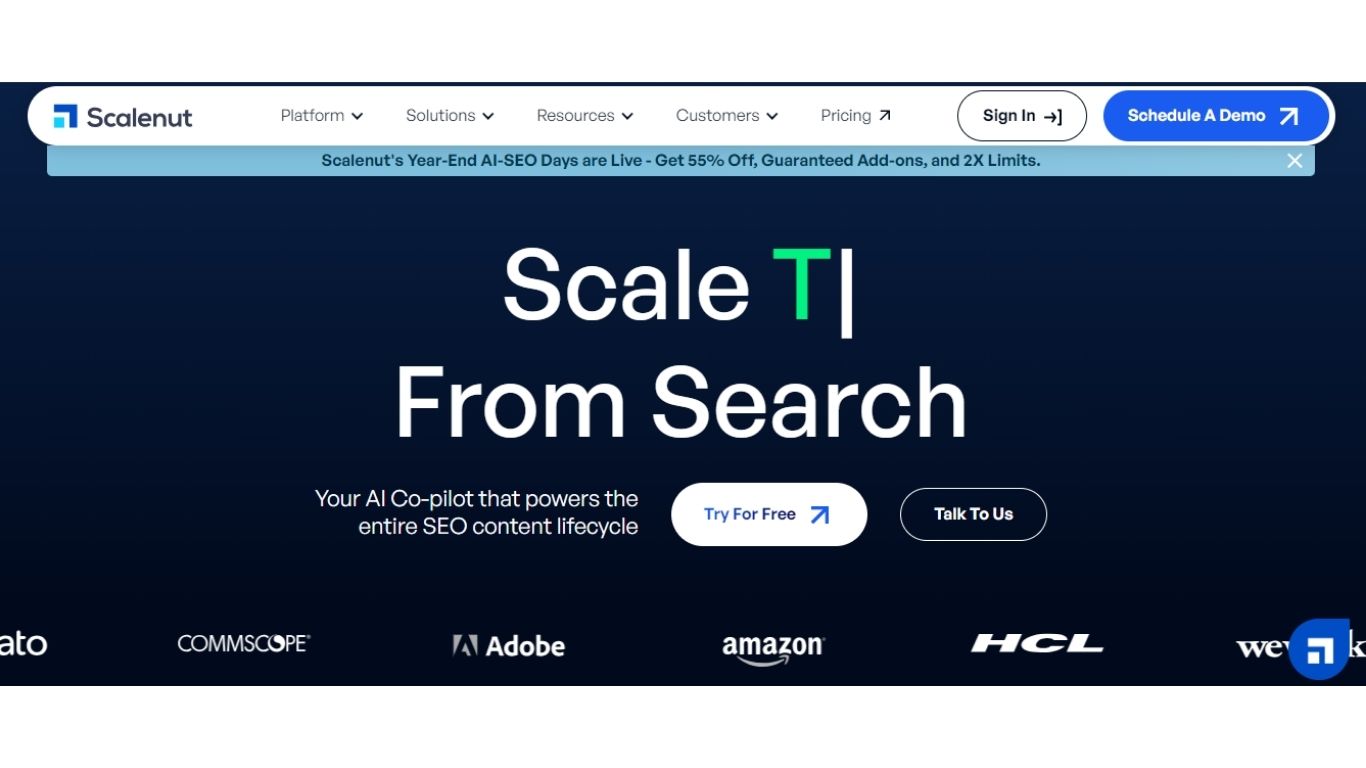
Scalenut is a powerful, full-stack AI SEO platform designed for content lifecycle management that has earned a strong reputation for its exceptional breadth-to-price ratio. Its standout feature — Cruise Mode — generates a keyword-researched, NLP-optimized, fully structured long-form article in under 5 minutes. But Scalenut’s depth goes significantly beyond content generation into full topical authority planning and site-wide optimization.
Scalenut produced the longest, most structured article in rigorous testing — roughly 3,000 words in about 90 seconds, with comparison tables, a FAQ section, and a comprehensive heading hierarchy. You get a good amount of control over your article settings before writing. The platform includes keyword research, a content optimiser, and a GEO Watchtower feature for tracking how your content appears in AI search results.
Key Features
Cruise Mode — Scalenut’s flagship feature and one of the most impressive content automation systems in the market. Input a keyword → Cruise Mode pulls SERP data → generates an NLP-grounded outline → builds a complete first draft with optimized headings, semantic terms, and a proper FAQ section — all in under 5 minutes. The workflow feels genuinely considered rather than just fast.
Topic Cluster Builder — instead of targeting isolated keywords, Scalenut’s Topic Cluster feature maps the semantic landscape of a topic, identifying content pillars and supporting articles that together build topical authority. This cluster-based approach is central to how Google evaluates sites in competitive niches.
SERP Analyzer — real-time analysis of top-ranking competitor pages for any target keyword, surfacing word counts, heading structures, NLP terms, entities, and commonly covered topics.
Content Optimizer with NLP Scoring — the in-editor optimizer provides real-time scoring based on NLP analysis, highlighting missing semantic terms, over-optimized keywords, and structural gaps — updating continuously as you write.
Auto-Optimize Feature — for existing content, Scalenut’s auto-optimize function analyzes underperforming pages and generates specific, prioritized recommendations for improvement without requiring a full rewrite.
Internal Linking Suggestions — automatically identifies internal linking opportunities as you write, connecting new content to existing relevant pages on your site.
GEO Watchtower — tracks how your content appears in AI-generated search responses (ChatGPT, Gemini, Perplexity) — a forward-looking feature that few competitors have prioritized.
Integrations — WordPress and Semrush integrations for streamlined publishing and keyword research.
Pricing
- Essential: $37/month — 5 AI articles, core features
- Growth: $77/month — 30 AI articles, full feature set (recommended)
- Pro: $145/month — 75 AI articles, advanced features
- Annual billing reduces all tiers by approximately 20%
Pros
- Cruise Mode is genuinely impressive — one of the fastest keyword-to-draft workflows available
- Topic cluster builder uniquely supports topical authority strategy, not just individual articles
- High monthly article limits on mid-tier plans relative to competitors
- GEO Watchtower for AI search visibility tracking
- One of the best value-to-feature ratios in the category
Cons
- Best features (full site-wide optimization, higher article limits) require Growth or Pro tiers
- May offer more than small teams need — the breadth can feel overwhelming initially
- AI prose still needs human editing before publication
- Large projects can feel sluggish on lower-tier plans
5. Jasper
Best for: Enterprise marketing teams and brand-consistent content creation at scale
Starting price: $49/month (Creator) | Free trial: 7-day trial | Rating: ⭐⭐⭐⭐☆
Overview
Jasper is not primarily an SEO tool — it’s an AI content platform built for marketing teams that need to create high-quality, on-brand content at scale across multiple formats: blogs, emails, social media, ad copy, landing pages, and campaigns. What makes it relevant in an SEO context is its deep native integration with Surfer SEO, which adds real-time SERP-grounded optimization to Jasper’s exceptional content generation quality.
Jasper excels as a marketing content platform rather than a dedicated SEO tool. It integrates with Surfer SEO, letting you optimize as you write. It’s a productivity booster, especially for marketers who need to churn out lots of content. Jasper can get you 80% of the way there in a fraction of the time.
Key Features
Brand Voice 3.0 — Jasper’s most distinctive feature. You upload brand guidelines, style documents, and example content; Jasper learns your specific tone, vocabulary, and messaging style; all subsequent content generation follows your brand standards automatically. For organizations where consistency is non-negotiable, this is unmatched.
50+ Content Templates — pre-built templates for every marketing format: blog posts, product descriptions, email campaigns, LinkedIn posts, Facebook ads, YouTube scripts, press releases, and more. Versatility across formats in a single platform.
Jasper AI Agents (2025) — new in 2025, Jasper AI Agents handle complex, multi-step tasks independently: campaign planning, content calendars, research-to-draft pipelines — operating with minimal human direction for extended workflows.
Native Surfer SEO Integration — Jasper’s deepest SEO value is its integration with Surfer’s Content Editor. Write in Jasper while Surfer’s real-time optimization score runs in parallel — combining Jasper’s writing quality with Surfer’s SERP data. This Jasper + Surfer pairing is one of the most sophisticated content workflows available in 2025.
Jasper MCP — users can design custom workflow templates tailored to their specific content processes — brand-specific prompts, research inputs, and output formats saved as reusable pipelines.
Plagiarism Checker — integrated Copyscape-powered plagiarism detection ensures originality before publishing.
Grammarly, Webflow, Google Sheets Integrations — connects to tools already in your workflow for seamless content production.
Pricing
- Creator: $49/month — 1 user, AI writing, 50+ templates
- Pro: $69/month per seat — Brand Voice, collaboration, more modes
- Business: Custom — AI Agents, enterprise governance, advanced campaign tools
Pros
- Best-in-class brand voice consistency across all content types
- Widest content format coverage of any tool reviewed
- Jasper AI Agents for autonomous multi-step content workflows
- Native Surfer integration creates a powerful combined writing + optimization workflow
- Mature platform trusted by HubSpot, Airbnb, and other major brands
Cons
- Not a standalone SEO tool — requires Surfer integration for SEO optimization
- Higher cost than purpose-built SEO content tools
- AI-generated content still needs human review for factual accuracy
- Most powerful features (AI Agents, enterprise governance) are in the Business plan
6. Writesonic

Best for: Bloggers, small teams, and marketers who need fast, affordable, multi-format content generation
Starting price: $16/month | Free trial: Yes (limited free plan) | Rating: ⭐⭐⭐⭐☆
Overview
Writesonic has evolved significantly from its origins as a general AI writing tool into a platform with genuine SEO content capabilities. Popular with bloggers and small teams because it can go from keyword input to draft quickly, Writesonic offers one of the most accessible entry points in the market — a functional free plan, plans starting at $16/month, and a feature set that covers keyword research, content brief generation, AI article writing, and optimization scoring.
Writesonic is popular with bloggers and small teams because it can go from keyword input to draft quickly. Like any writing tool, it benefits from a clear strategy and a revision process that adds real-world experience and originality.
Key Features
AI Article Writer 6.0 — Writesonic’s latest article writer leverages real-time web research to generate long-form SEO articles with citations, factual accuracy improvements, and proper source referencing — a meaningful step beyond AI tools that generate plausible-sounding but potentially inaccurate text.
Chatsonic — a conversational AI interface similar to ChatGPT but with real-time web access — useful for research, content ideation, and quick copy generation within a chat interface. It integrates with Google Search for real-time information and can generate images via DALL-E.
SEO-Optimized Content Briefs — input a keyword and Writesonic generates a content brief including competitor headings, key questions, NLP terms, and a suggested structure based on SERP analysis.
Multi-LLM Support — Writesonic allows users to choose between multiple AI models (GPT-4, Claude, Gemini) for different content tasks — a unique capability for users who want to optimize output quality for specific content types.
Botsonic — a no-code AI chatbot builder that can be embedded on websites — expanding Writesonic beyond writing into customer-facing AI applications.
Brand Voice Training — similar to Jasper’s Brand Voice, Writesonic can learn your specific tone and messaging from uploaded examples.
100+ Templates — comprehensive template library covering every marketing format.
Surfer SEO Integration — Writesonic integrates with Surfer for on-page optimization scoring alongside AI content generation.
Pricing
- Free: Limited words/month, basic features
- Individual: $16/month — 1 user, unlimited words (fair use), core AI writing
- Standard: $79/month — team features, advanced SEO tools
- Professional: Custom — agency-scale features
Pros
- Most affordable paid entry point at $16/month for unlimited writing
- Real-time web research improves factual accuracy of AI-generated content
- Multi-LLM selection gives users quality optimization options
- 100+ templates covering every content format
- Free plan available for testing before committing
Cons
- SEO optimization capabilities are lighter than dedicated tools like Surfer or Frase
- Content quality benefits significantly from human editing
- Some advanced features require higher-tier plans
- Less SERP-grounded than specialized SEO writing tools
7. SEO.ai
Best for: Teams and agencies that need autonomous, scalable SEO content production with minimal manual input
Starting price: $49/month | Free trial: 7-day free trial | Rating: ⭐⭐⭐⭐☆
Overview
SEO.ai positions itself as an autonomous SEO content engine — designed for marketers, agencies, and entrepreneurs who need to scale organic content production without dedicating manual effort to each piece. Where most tools assist a human writer, SEO.ai is designed to operate with minimal human direction: input a keyword, and the platform handles research, brief generation, draft writing, and optimization scoring with what the company describes as a “hands-free” approach.
For high-volume content production, the Scalenut + SEO.ai combination ($88/month combined) delivers tremendous value for comprehensive content optimization. SEO.ai excels for teams that want fewer tools and a more unified creation process.
Key Features
Autonomous Content Generation — SEO.ai’s core capability: generating publish-ready SEO articles from a keyword input with minimal configuration. The platform handles SERP research, brief generation, drafting, and optimization in a single automated pipeline.
Real-Time SEO Scoring — a content score updates in real time as content is generated or edited, measuring alignment with SERP data and NLP recommendations.
SERP-Based Content Briefs — automatic brief generation from live SERP analysis — competitor headings, average word counts, semantic terms, and structural recommendations.
Keyword Research Integration — built-in keyword research to identify opportunities before generating content, keeping research and production in the same workflow.
Bulk Content Generation — for high-volume operations, SEO.ai supports generating multiple articles in a single batch — a significant time-saver for agencies managing many keywords simultaneously.
CMS Integrations — direct publishing integrations with WordPress and other CMS platforms to streamline the publish pipeline.
Multilingual Support — content generation in multiple languages, expanding utility for international SEO campaigns.
Pricing
- Starter: $49/month — limited articles, core automation
- Growth: $129/month — more articles, bulk generation
- Agency: Custom — high-volume, team features
Pros
- Most automated workflow of tools reviewed — closest to “set and forget” content production
- Bulk generation for scaling content operations efficiently
- Real-time SEO scoring with SERP-grounded recommendations
- Multilingual support for international content strategies
- Clean interface designed for speed over complexity
Cons
- Autonomous generation requires oversight — AI content that isn’t reviewed can introduce factual errors or generic language
- Less granular control than tools like Surfer SEO for users who want to fine-tune optimization
- Bulk-generated content can show consistency issues without editorial review
- Best suited for teams comfortable with AI-first workflows
8. MarketMuse
Best for: Enterprises, large content sites, and teams building deep topical authority across large content libraries
Starting price: Free (limited) / $99/month Pro | Free trial: Free plan available | Rating: ⭐⭐⭐⭐½
Overview
MarketMuse is the strategy-heavy platform built for planning, topical coverage, and authority building across large libraries. Where most tools help you optimize individual articles, MarketMuse helps you understand — and systematically close — topical gaps across your entire website. It’s the tool for teams who aren’t just trying to rank one article; they’re building a content fortress.
MarketMuse is the leader here for deep strategic authority. Its content inventory and planning features are unmatched for identifying and closing topic gaps across your entire site. If your goal is deep strategic authority, MarketMuse is the answer.
Key Features
Content Inventory and Audit — MarketMuse crawls your entire existing content library and evaluates each piece against the competitive landscape for its target topic, identifying which pages are well-covered, which are thin, and which topics are completely missing from your site.
Topic Modeling and Knowledge Graphs — MarketMuse’s AI builds detailed models of topic-entity relationships, showing you the full semantic landscape of any subject — what subtopics exist, how they relate to each other, and which ones your site needs to address.
Personalized Difficulty Score — unlike generic keyword difficulty metrics, MarketMuse’s difficulty score is personalized to your site’s specific authority profile — showing you which topics you can realistically rank for given your current content depth and domain strength.
Content Briefs — MarketMuse generates deep, research-backed briefs that include target topics, sub-topics, entities to mention, questions to answer, recommended word count, internal linking suggestions, and competitive data — the most comprehensive briefs of any tool reviewed.
Content Score — real-time scoring based on MarketMuse’s topic models, measuring how comprehensively your content covers the full topic landscape rather than just keyword inclusion.
SERP X-Ray — detailed analysis of ranking pages for any keyword, including their content scores, topic coverage, and gaps — providing competitive intelligence down to the semantic level.
Content Planning Workflow — organize content initiatives across your site by topic cluster, filling coverage gaps systematically rather than publishing reactively.
Pricing
- Free: 10 queries/month — limited briefs and research
- Starter: $99/month — 100 queries, full features for individual creators and small teams
- Standard: $149/month — expanded limits, team features
- Team: $399/month — agency and enterprise features, advanced collaboration
Pros
- Unmatched for site-wide topical authority strategy and content gap analysis
- Personalized difficulty scores account for your site’s specific authority profile
- Most comprehensive content briefs of any tool reviewed
- Topic modeling reveals the full semantic landscape, not just keyword lists
- Essential for teams managing large content libraries (100+ articles)
Cons
- High cost for individual users — the $99/month minimum is steep for solo creators
- Complexity requires investment in learning the platform
- Depth of strategic analysis is overkill for teams producing low volumes of content
- Better suited as a strategy and planning layer alongside a writing tool than as a standalone solution
9. WordLift

Best for: Technical SEOs and publishers who want structured data, knowledge graphs, and entity-based SEO
Starting price: $49/month | Free trial: 14-day free trial | Rating: ⭐⭐⭐⭐☆
Overview
WordLift occupies a unique position in the AI SEO writing tools landscape — it is not primarily a content generation tool, but an AI-powered semantic SEO platform that uses knowledge graph technology, entity optimization, and structured data implementation to help search engines better understand and categorize your content. It complements content writing tools by operating at the layer of meaning and structure that search engines use to interpret content relevance.
WordLift uses semantic technology to build knowledge graphs and improve internal linking, helping websites better communicate with search engines through structured data and entity-based optimization.
Key Features
Knowledge Graph Building — WordLift’s most distinctive capability. It automatically identifies entities (people, places, organizations, concepts) in your content and creates a structured knowledge graph connecting these entities across your site — giving search engines a clear, machine-readable map of your site’s topical territory.
Automatic Structured Data (Schema Markup) — WordLift automatically generates and embeds JSON-LD structured data into your content: Article, FAQPage, HowTo, Product, Event, and other schema types. Structured data is increasingly important for rich results and for how AI-powered search engines interpret content.
Entity Optimization — as you write, WordLift identifies named entities in your content and suggests related entities, facts, and context — ensuring your content is semantically complete in ways that align with how Google’s Knowledge Graph evaluates topical authority.
Internal Linking Recommendations — WordLift’s knowledge graph powers an internal linking engine that automatically suggests relevant internal links as you write — connecting new content to existing related pages based on entity relationships rather than just keyword matching.
Content Analysis — analyzes existing content for semantic completeness, entity coverage, and structured data gaps — providing an optimization roadmap for legacy content.
AI-Powered Writing Assistant — a writing assistant that pulls in semantic context from your knowledge graph as you write, suggesting factual additions, entity mentions, and related concepts.
WordPress Plugin + API — deep WordPress integration via plugin plus an API for custom integration with any CMS.
Pricing
- Individual: $49/month — 1 site, up to 750 pages
- Business: $99/month — up to 3 sites, 3,000 pages
- Agency: $249/month — unlimited sites, priority support
- Custom/Enterprise: Contact sales
Pros
- Unique knowledge graph approach provides semantic SEO benefits no other tool offers
- Automatic schema markup generation removes a significant technical barrier
- Entity-based internal linking is more contextually accurate than keyword-based alternatives
- 14-day free trial provides genuine evaluation time
- Particularly valuable for news publishers, e-commerce, and information-dense sites
Cons
- Not a content writing tool — needs to be paired with a writing platform for full-funnel coverage
- Steeper technical learning curve than other tools reviewed
- Knowledge graph approach requires an investment in setup and ongoing refinement
- Less immediately intuitive for users unfamiliar with semantic SEO concepts
10. Clearscope
Best for: Editorial teams with high content standards where accuracy and NLP precision are non-negotiable
Starting price: $189/month | Free trial: Demo available | Rating: ⭐⭐⭐⭐½
Overview
Clearscope is the tool chosen by editorial teams at major publishers, high-authority sites, and organizations where content quality is a brand-level requirement. It is the precision instrument of content optimization — not the fastest or most affordable option, but consistently rated as providing the most accurate, most actionable NLP-based content recommendations available. For teams where getting it exactly right matters more than getting it done quickly, Clearscope is the standard.
Clearscope is known for precision. If you have editorial standards, regulated topics, or high-stakes pages where accuracy and relevance matter, Clearscope can be a strong choice. Clearscope remains strong for precision as one of the gold standards in the category.
Key Features
NLP-Powered Content Report — Clearscope’s core feature. Enter a target keyword, and Clearscope generates a report powered by IBM Watson’s NLP analysis and Google search data, identifying the most important terms, entities, and semantic concepts your content must address to compete at the top of the SERP.
Real-Time Content Grade — a live A+ through F letter grade updates as you write, measuring how completely your content covers the NLP-recommended terms and concepts. The letter grade provides an at-a-glance optimization status during writing and editing.
Term Importance Weighting — Clearscope doesn’t just list recommended terms — it weights them by importance. You can see at a glance which terms are critical inclusions vs. which are supplementary, allowing efficient optimization prioritization.
Google Docs Integration — Clearscope’s Google Docs add-on is one of its most beloved features. Writers can optimize within their existing Google Docs workflow without switching tools — a significant workflow friction reduction for teams already using Docs.
WordPress Plugin — for teams publishing directly from WordPress, Clearscope’s plugin brings the content grade into the WordPress editor.
Content Inventory — Clearscope can analyze your existing content library, identifying which pages have strong content grades vs. which are underoptimized and most likely to benefit from updates.
AI Outline Generator — generates heading-level outlines from the NLP analysis, giving writers a structured starting point before drafting.
Pricing
- Essentials: $189/month — 100 content reports, unlimited users
- Business: $399/month — 300 content reports, priority support
- Enterprise: Custom — unlimited reports, custom features
Pros
- Most precise NLP recommendations of any tool reviewed — consistently rated most accurate for term importance
- Unlimited users on all plans — ideal for large editorial teams
- Google Docs integration removes friction from existing writing workflows
- Letter-grade system makes optimization status immediately clear
- Used and trusted by major publishers including Conde Nast, Deloitte, and HubSpot
Cons
- High cost — $189/month is the most expensive entry point of tools reviewed
- No built-in AI writing features — purely an optimization tool; requires a separate writing tool
- Content report limits on lower tiers may be restricting for high-volume teams
- Premium price difficult to justify for small teams or solo creators
Tool Comparison Table
| Tool | Starting Price | AI Writing | SERP Analysis | Content Scoring | Brief Generation | Best For |
|---|---|---|---|---|---|---|
| Surfer SEO | $89/mo | ✅ | ✅ Best-in-class | ✅ Real-time | ✅ | Content teams |
| Frase | $45/mo | ✅ | ✅ | ✅ | ✅ Best-in-class | Strategists, writers |
| Outranking | $29/mo | ✅ | ✅ | ✅ | ✅ | Scaling teams |
| Scalenut | $37/mo | ✅ Cruise Mode | ✅ | ✅ NLP | ✅ | All-in-one users |
| Jasper | $49/mo | ✅ Best-in-class | via Surfer | via Surfer | ⚠️ | Enterprise brands |
| Writesonic | $16/mo | ✅ | ✅ | ✅ | ✅ | Bloggers, SMBs |
| SEO.ai | $49/mo | ✅ Autonomous | ✅ | ✅ | ✅ | Bulk production |
| MarketMuse | Free/$99/mo | ⚠️ Limited | ✅ | ✅ Advanced | ✅ Comprehensive | Enterprise strategy |
| WordLift | $49/mo | ⚠️ Basic | ⚠️ | Semantic/Entity | ✅ | Technical SEO |
| Clearscope | $189/mo | ❌ | ✅ | ✅ Highest precision | ✅ AI outline | Editorial teams |
Best Combinations for Different Use Cases
| Use Case | Recommended Stack |
|---|---|
| Solo blogger on a budget | Writesonic ($16) + Frase ($45) or Scalenut Growth ($77 all-in-one) |
| Content team wanting optimization + writing | Surfer SEO + Jasper (native integration) |
| Agency needing bulk production | Scalenut + SEO.ai |
| Enterprise building topical authority | MarketMuse (strategy) + Surfer SEO (execution) + Clearscope (precision) |
| Technical SEO-focused publisher | WordLift + Frase or Surfer SEO |
| Brand-focused marketing team | Jasper (brand voice) + Surfer SEO (optimization) |
How to Get the Most from AI SEO Writing Tools
1. Use SERP Analysis Before Writing — Every Time
Don’t start writing until you’ve analyzed what’s already ranking. Every tool in this review offers some form of SERP analysis. Reviewing top-ranking competitor pages before writing tells you the expected word count, heading structure, and semantic concepts your piece needs to address — turning guesswork into a data-grounded strategy. This is the single habit that produces the largest improvement in content ranking performance.
2. Treat AI Content as a First Draft — Not a Final Product
AI-generated content needs human editing — always. The best tools produce strong first drafts that save significant writing time; they don’t produce polished, brand-perfect final copy. Reserve editing, personalization, and creative choices for your team. Stay involved in ideation and final reviews. Lean on AI to speed up research and first drafts.
Our SEO content writing services use AI tools as research and drafting accelerators while applying human editorial expertise to produce content that is genuinely original, factually accurate, and brand-appropriate — the combination that actually ranks and converts.
3. Prioritize Tools That Combine Writing and Optimization
The fastest way to climb the rankings is to see what already works. AI SEO tools let you study the highest-ranking pages and spot their strengths and weaknesses. Tools that integrate both the writing phase and the optimization scoring phase (Surfer SEO, Scalenut, Frase, Outranking) eliminate context-switching and keep optimization top of mind throughout the drafting process.
4. Build Topical Clusters, Not Just Individual Articles
The platforms that drive the most SEO compound value are those that support content strategy at the topic cluster level — Scalenut’s Topic Cluster Builder and MarketMuse’s Content Inventory are specifically designed for this. A cluster of 15 semantically related articles on a topic builds far more authority than 15 unrelated articles targeting different topics.
5. Leverage Integrations with Your Existing Workflow
Tools that integrate with your existing CMS, collaboration platform, and SEO stack eliminate friction that kills adoption. The best AI writing tool is the one your team actually uses consistently. Clearscope’s Google Docs integration, Surfer’s WordPress and Google Docs integrations, and Jasper’s Grammarly and Webflow integrations reduce workflow friction significantly.
6. Combine Content Optimization with Technical SEO
AI writing tools optimize your content — they don’t optimize your technical infrastructure. Page speed, Core Web Vitals, internal linking architecture, and crawlability all affect whether your well-optimized content actually ranks. Our Search Engine Optimization services ensure that both the content and the technical foundation are working together. And our website development services ensure the infrastructure beneath your content supports the rankings your optimization work earns.
7. Monitor Performance and Update Regularly
Publishing is not the end of the process. Use your optimization platform’s content audit features (Scalenut’s Auto-Optimize, MarketMuse’s Content Inventory, Clearscope’s content grading for existing pages) to regularly review published content and identify pieces that have drifted out of optimization alignment as the SERP evolves.
14. Frequently Asked Questions
What is the best AI writing tool for SEO in 2025? The best tool depends on your use case. For real-time content optimization with the most accurate SERP-grounded scoring, Surfer SEO is the gold standard. For automated brief generation and research, Frase delivers exceptional value. For an all-in-one workflow at a competitive price, Scalenut’s Cruise Mode is impressive. For enterprise brand consistency combined with SEO optimization, the Jasper + Surfer SEO integration is the most sophisticated workflow available.
Is Surfer SEO worth it? Yes — for teams that publish content regularly and want consistent on-page alignment with top-ranking pages, Surfer SEO’s real-time content scoring is one of the highest-ROI investments in an SEO stack. Its proven track record for improving rankings, combined with an intuitive interface and excellent educational resources, makes it the reliable choice for content teams. The main limitation is scope: Surfer optimizes individual pieces well but doesn’t manage site-wide strategic authority building.
What is the difference between Frase and Surfer SEO? Frase excels at the research and brief generation phase — it analyzes the SERP, identifies competitor content patterns, and generates detailed briefs faster than any other tool. Surfer SEO excels at the optimization phase — its real-time content scoring and NLP recommendations while you write are the most accurate in the category. Many professional content teams use both together: Frase for research and briefs, Surfer for live optimization scoring during writing.
Can AI writing tools replace human writers for SEO? Not currently. AI tools significantly accelerate the writing process and improve optimization quality, but they still produce content that requires human editing for accuracy, brand voice, nuanced insights, and genuine originality. The most effective approach is human-AI collaboration: use AI tools to handle research, structure, and first-draft generation; use human expertise for editing, fact-checking, strategic insight, and final polish.
What is Cruise Mode in Scalenut? Cruise Mode is Scalenut’s automated content generation workflow that takes a seed keyword and produces a complete, NLP-optimized long-form article — including structured headings, semantic terms, FAQ section, and internal linking suggestions — in under 5 minutes. It pulls live SERP data, generates an outline, allows user review, and then writes the full draft. It’s one of the most impressive speed-to-quality workflows in the category.
Which AI SEO tool is best for agencies? Agencies typically need tools that support team collaboration, scale across multiple client sites, and provide professional reporting. The best options for agencies include: Scalenut Growth/Pro for high-volume content production, Surfer SEO Scale for content teams, MarketMuse Standard/Team for strategic content planning, and Jasper Business for brand-governed content at scale. The Surfer + Jasper combination is specifically praised by agencies managing multiple clients.
Is MarketMuse worth the price? MarketMuse’s $99/month starting price is high for individual creators, but for enterprise teams managing large content libraries (50+ articles) and building topical authority systematically, its content inventory, topic modeling, and personalized difficulty scores provide strategic value that other tools don’t offer. If your biggest SEO challenge is identifying and closing topical gaps across a large site, MarketMuse’s depth justifies the investment.
Wrapping Up
The best AI writing tool for SEO is the one that fits your specific workflow, volume, and objectives — not the one with the highest review scores or the most features on paper. Here’s the one-line summary for each:
- Surfer SEO — most accurate real-time content scoring; the industry standard for on-page optimization
- Frase — fastest, most automated content brief generation; exceptional research workflow
- Outranking — most complete end-to-end workflow from keyword to published draft
- Scalenut — best all-in-one value; Cruise Mode is genuinely impressive for speed + quality
- Jasper — best brand voice consistency; most powerful when paired with Surfer SEO
- Writesonic — most affordable entry point; strong for bloggers and small teams
- SEO.ai — most autonomous workflow; best for high-volume, bulk content production
- MarketMuse — unmatched for site-wide topical authority strategy and content gap analysis
- WordLift — unique knowledge graph and schema markup approach for semantic SEO
- Clearscope — highest NLP precision; the editorial standard for major publishers
Whatever tools you choose, the strategy behind them matters more than the platforms themselves. At Macroter, we help businesses build the content strategy, technical SEO foundation, and distribution infrastructure that turns well-optimized content into compounding organic growth:
- 🔍 Search Engine Optimization Services
- ✍️ SEO Content Writing Services
- 📣 Content Marketing Services
- 💰 Pay-Per-Click (PPC) Marketing Services
- 🌐 Website Development Services
- 📱 Social Media Management Services
Published by Macroter Digital Marketing Agency — Helping businesses grow through data-driven SEO, content, and digital strategy.

I’m Md Nasir Uddin, a digital marketing consultant with over 9 years of experience helping businesses grow through strategic and data-driven marketing. As the founder of Macroter, my goal is to provide businesses with innovative solutions that lead to measurable results. Therefore, I’m passionate about staying ahead of industry trends and helping businesses thrive in the digital landscape. Let’s work together to take your marketing efforts to the next level.