
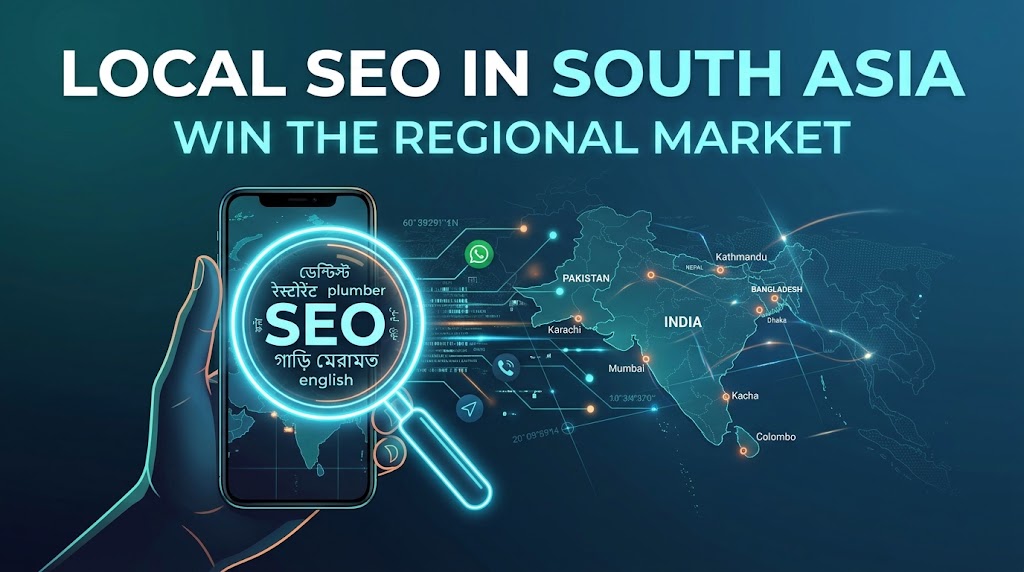
Reaching digital consumers across South Asia—spanning India, Bangladesh, Pakistan, Sri Lanka, and Nepal—presents a unique set of challenges that standard, Western-focused local SEO Playbooks cannot solve.
Applying a traditional Anglo-centric local search playbook to a market characterized by over 1.5 billion consumers, dozens of official languages, regional scripts, and widespread conversational code-switching (like Hinglish, Banglish, or Roman Urdu) will lead to missed opportunities.
In South Asia, local intent is driven by hyper-mobile device usage, voice search in regional dialects, WhatsApp business interactions, and neighborhood-level discovery. Whether managing a multi-location enterprise retail network in Mumbai and Dhaka, or scaling a local service brand in Karachi or Kathmandu, winning regional market share requires a localized approach.
This comprehensive guide details the strategic frameworks, multi-lingual keyword structures, citation models, and technical architectures necessary to build a dominant local search presence across South Asia.
The South Asian Local Search Landscape: Key Market Drivers
To rank in regional South Asian SERPs, marketers must align with the specific search habits and technology ecosystems that shape the continent’s digital behaviors.
       ┌────────────────────────────────────────────────────────┐
       │             SOUTH ASIAN LOCAL SEARCH STACK             │
       └────────────────────────────────────────────────────────┘
                                   │
      ┌────────────────────────────┼────────────────────────────┐
      ▼                            ▼                            ▼
┌───────────┐                ┌───────────┐                ┌───────────┐
│ MULTI-    │                │ VOICE &   │                │ MOBILE &  │
│ LINGUAL   │                │ DIALECT   │                │ DIRECT    │
│ CODE-     │                │ SEARCH    │                │ MESSAGING │
│ SWITCHING │                │           │                │           │
├───────────┤                ├───────────┤                ├───────────┤
│ Native    │                │ Regional  │                │ WhatsApp, │
│ Scripts & │                │ Phonetics │                │ Direct    │
│ Romanized │                │ & Convers.│                │ Calls &   │
│ Vernacular│                │ Queries   │                │ Maps Navigation
└───────────┘                └───────────┘                └───────────┘
Key Drivers Shaping Regional Search
-
Dominance of Romanized Vernacular (Code-Switching): A vast segment of the population conducts searches using phonetic English alphabets to spell native words—such as “best biryani shop near me” mixed with “Chittagong shorborot dukan” (Banglish) or “Sasto restaurant in Delhi” (Hinglish).
-
Mobile-First & Voice-Driven Intent: High mobile penetration paired with accessible data plans means users often rely on voice assistants (Google Assistant in native languages) to find local services on the go.
-
Hyper-Local Neighborhood Boundaries: Address conventions in South Asia rarely follow strict grid-based ZIP/Postal code systems. Search intent is deeply tied to informal landmarks, local market area names (“thanas”, “checkposts”, or “bazaars”), and transport hubs.
-
Instant Messaging as the Conversion Layer: Unlike Western markets where contact forms or online booking widgets dominate, South Asian consumers prefer immediate, low-friction channels—primarily WhatsApp Business chats and direct mobile phone calls.
| Search Vector | Western Local SEO | South Asian Regional Local SEO |
| Primary Language | Monolingual English / Standard Native | Multilingual + Phonetic Romanized Vernacular (Hinglish, Banglish, Roman Urdu) |
| Search Medium | Desktop & Mobile Text Queries | Mobile-First Text, Voice Search & Image-based Discovery |
| Address Structure | Standard Street Number + Postal Code | Landmark-driven + Neighborhood/Bazaar/Locality Identifiers |
| Primary Conversion | Web Form / On-site Booking | WhatsApp Direct Chat / Direct Call Button / Google Maps Navigation |
| Review Platforms | Google, Yelp, Facebook | Google Business Profile, WhatsApp, Facebook Groups & Local Directories |
Key Takeaway
Local SEO in South Asia is not about simple language translation; it is about language transliteration and localizing for how real people speak, search, and message in their daily routines.
Pillar 1: Optimizing Google Business Profile (GBP) for South Asian Geographies
Google Business Profile (GBP) serves as the primary gateway for local search visibility across South Asian cities. Winning the Local 3-Pack requires precise setup tailored to regional user habits.
┌──────────────────────────────────────────────────────────────────────────┐
│                   GBP SOUTH ASIA OPTIMIZATION FLOW                       │
└──────────────────────────────────────────────────────────────────────────┘
                                     │
 ┌─────────────────────────┐         │         ┌───────────────────────────┐
 │   PRIMARY BUSINESS NAME │         │         │   LANDMARK-BASED ADDRESS  │
 │ (Brand Name + Primary   │─────────┼────────>│ (Plot/Block + Landmark    │
 │  Regional Descriptor)   │         │         │  Reference Point)         │
 └─────────────────────────┘         │         └─────────────┬─────────────┘
                                     │                       │
                                     ▼                       ▼
                       ┌───────────────────────────┐
                       │ SECONDARY CATEGORIES &    │
                       │ MULTI-SCRIPT ATTRIBUTES   │
                       │ (English + Native Script) │
                       └───────────────────────────┘
1. Business Name & Category Precision
Avoid spammy keyword-stuffing in your official GBP title, as Google actively suspends listing profiles across India, Pakistan, and Bangladesh for guideline violations. Instead, establish clear category relevance:
-
Primary Category: Choose the most specific primary category that reflects your core revenue driver (e.g., Polymer Manufacturer, Dentist, Retort Packaging Supplier).
-
Secondary Categories: Add up to 9 secondary categories to capture adjacent search intent.
2. Landmark-Driven Address Architecture
Postal codes in South Asia cover broad geographic zones and often lack precise micro-location clarity. To ensure both search bots and physical customers can locate your storefront, structure your address field with explicit landmarks:
Plaintext
// Example Enterprise GBP Address Setup (Dhaka / Delhi / Karachi)
Building Name / Plot No. 42, Floor 3,
Opposite Central Mosque, Near Sector 11 Bus Stand,
Uttara Model Town, Uttara,
Dhaka, 1230, Bangladesh.
3. Integrating WhatsApp Business Links
Since WhatsApp is the primary communication tool across the region, set your GBP Appointment / Contact Link directly to a tracked WhatsApp Business deep-link API:
Plaintext
https://wa.me/8801700000000?text=Hello%20I%20found%20your%20business%20on%20Google%20Maps
Pro Tip: Upload high-resolution geotagged photos of your storefront’s physical exterior showing the permanent signage in both English and the regional native script (e.g., Bengali, Hindi, Urdu). This builds immediate trust with reviewers and confirms physical presence to Google’s automated vision algorithms.
Pillar 2: Vernacular SEO & Transliteration Strategy (Hinglish, Banglish & Local Scripts)
A major gap in South Asian local SEO strategies is neglecting how consumers actually type and speak queries. A user looking for home painting services in Kolkata or Dhaka may search using native script, standard English, or Romanized colloquial phrases.
                  ┌──────────────────────────────────────┐
                  │    TRIPLE-SCRIPT KEYWORD TAXONOMY    │
                  └──────────────────────────────────────┘
                                     │
           ┌─────────────────────────┼─────────────────────────┐
           ▼                         ▼                         ▼
┌─────────────────────────┐ ┌─────────────────────────┐ ┌─────────────────────────┐
│     STANDARD ENGLISH    │ │     NATIVE SCRIPT       │ │   ROMANIZED VERNACULAR  │
│  "Best Interior Painter │ │  "সেরা ইন্টেরিয়র পেইন্টার" │ │ "Uttara bhalo painter   │
│   in Uttara"            │ │  (Bengali Script)       │ │  lagbe" (Banglish)      │
└─────────────────────────┘ └─────────────────────────┘ └─────────────────────────┘
1. Building a Transliteration Keyword Matrix
When conducting local keyword research for South Asian markets, build a multi-tiered keyword matrix covering three distinct linguistic entry points:
-
Standard English Queries (Commercial/Transactional): Used heavily by corporate buyers, B2B procurement heads, and tech-savvy urban audiences (e.g., “plastic pipe manufacturer in Chittagong”).
-
Native Script Queries (Informational/Hyper-Local): Used by users utilizing native keyboards or voice-to-text in regional scripts (e.g., “উত্তরায় সেরা ডাক্তার” or “दिल्ली में प्लंबर”).
-
Phonetic Romanized Queries (Conversational/Voice): Used by mobile users typing quickly or speaking informally into voice search (e.g., “Dhanmondi bhalo restaurant”, “Mumbai mein ac repair wala”).
2. On-Page Schema Implementation for Multilingual Localization
Use explicit HTML language attributes and Schema.org LocalBusiness markup to signal regional relevance cleanly to search engine crawlers.
JSON
{
  "@context": "https://schema.org",
  "@type": "LocalBusiness",
  "@id": "https://www.example.com/#localbusiness",
  "name": "City-One Polymer Industry Ltd.",
  "alternateName": ["সিটি-ওয়ান পলিমার ইন্ডাস্ট্রিজ লিঃ"],
  "image": "https://www.example.com/assets/factory-front.jpg",
  "telephone": "+8801700000000",
  "url": "https://www.example.com",
  "address": {
    "@type": "PostalAddress",
    "streetAddress": "Plot 12, BSCIC Industrial Estate",
    "addressLocality": "Cumilla",
    "addressRegion": "Chittagong Division",
    "postalCode": "3500",
    "addressCountry": "BD"
  },
  "geo": {
    "@type": "GeoCoordinates",
    "latitude": 23.4607,
    "longitude": 91.1809
  },
  "knowsLanguage": ["en", "bn", "hi"]
}
Pillar 3: On-Page Architecture & Hyper-Local Content Pillars
To capture multi-city or multi-neighborhood traffic, your website must feature dedicated, non-duplicate location pages structured specifically around regional user intent.
       ┌────────────────────────────────────────────────────────┐
       │             ENTERPRISE LOCATION PAGE UX                │
       └────────────────────────────────────────────────────────┘
                                   │
      ┌────────────────────────────┼────────────────────────────┐
      ▼                            ▼                            ▼
┌───────────┐                ┌───────────┐                ┌───────────┐
│ LOCAL HEAD│                │ EMBEDDED  │                │ LOCAL     │
│ CONTENT & │                │ GEOTAGGED │                │ PROOF &   │
│ LANDMARKS │                │ MAP & NAP │                │ REVIEWS   │
├───────────┤                ├───────────┤                ├───────────┤
│ Contextual│                │ Interactive│               │ Local     │
│ Regional  │                │ Directions│                │ Customer  │
│ References│                │ & Coordinates              │ Feedback  │
└───────────┘                └───────────┘                └───────────┘
1. Structuring Multi-Location Landing Pages
If your business operates across multiple hubs (e.g., Dhaka, Chittagong, Sylhet or Delhi, Bangalore, Mumbai), avoid creating thin, spun pages where only the city name is swapped.
High-Converting Location Page Elements:
-
Localized Headline & Introduction: Reference nearby commercial landmarks, local industrial zones, or known transport routes.
-
Local Team & Operations Highlights: Display real photos of your local office, regional warehouse, or local staff in action.
-
Embedded Interactive Map: Integrate an official Google Maps iframe pointing directly to your verified GBP listing for that specific branch.
-
Customer Testimonials in Native Dialects: Feature real feedback or video reviews from local clients speaking their native dialect to reinforce local social proof.
Example Application: A polymer pipe and manufacturing company creates a dedicated page for its Chittagong distribution hub. Rather than copying its main homepage text, the page features specific details regarding marine-grade fittings suitable for coastal humidity, logistics routes along the Dhaka-Chittagong Highway, and local customer support contacts.
Pillar 4: Citation Ecosystems & Regional Link Acquisition
While global directory platforms (like Yelp or YellowPages) carry minimal weight across South Asia, regional citation sources, local news portals, and community platforms are essential for building domain authority.
┌──────────────────────────────────────────────────────────────────────────┐
│                   SOUTH ASIAN CITATION & LINK STACK                      │
└──────────────────────────────────────────────────────────────────────────┘
                                     │
 ┌─────────────────────────┐         │         ┌───────────────────────────┐
 │ REGIONAL DIRECTORIES    │         │         │ LOCAL NEWS & TRADE PRESS  │
 │ (Justdial, Sulekha,     │─────────┼────────>│ (Prothom Alo, Times of    │
 │  YellowPages BD/PK)     │         │         │  India, Dawn, Financial   │
 └─────────────────────────┘         │         │  Express)                 │
                                     │         └─────────────┬─────────────┘
                                     │                       │
                                     ▼                       ▼
                       ┌───────────────────────────┐
                       │ COMMUNITY & TRADE ASSOC.  │
                       │ (Chambers of Commerce,    │
                       │  Local Merchant Guilds)   │
                       └───────────────────────────┘
1. Key Regional Citation Sources by Country
Ensure your Business Name, Address, and Phone Number (NAP) remain 100% consistent across core national directory platforms:
-
India: Justdial, Sulekha, IndiaMART, TradeIndia, MagicBricks (Real Estate).
-
Bangladesh: YellowPages Bangladesh, Bangladesh Business Directory, Bikroy (Merchant Shops), eCAB Member Directory.
-
Pakistan: BusinessList PK, Pakistan Yellow Pages, Bolee.com, ParkWheels (Automotive).
-
Sri Lanka: Rainbow Pages (SLT), LankaBusinessOnline.
2. Hyper-Local Digital PR & Link Acquisition
Building high-authority local backlinks in South Asia relies on community-driven PR initiatives and regional media partnerships:
-
Sponsor Local Industry Trade Events: Sponsor regional trade fairs, chamber of commerce expos, or university career fairs to earn authoritative
.eduand.orgbacklinks. -
Regional Press Release Distribution: Distribute milestone announcements (such as factory openings, sales achievements, or CSR initiatives) to recognized national news portals (e.g., Prothom Alo, The Daily Star, The Times of India, Dawn, or The Financial Express).
Common Pitfalls in South Asian Local SEO (And How to Avoid Them)
Avoid these frequent mistakes when launching local search campaigns across regional South Asian markets:
1. Ignoring WhatsApp Integration
-
The Error: Directing mobile search traffic to lengthy, multi-field web lead forms that friction-averse mobile users abandon.
-
The Fix: Place a prominent, sticky WhatsApp Business chat button on all mobile landing pages, enabling potential leads to start a conversation in one tap.
2. Inconsistent Name, Address, and Phone (NAP) Data
-
The Error: Using different variations of your business name (e.g., “City-One Polymer”, “City-One Polymer Industry Ltd.”, “City One Pipes”) across local listings.
-
The Fix: Maintain a strict brand documentation guide. Ensure your official business name, primary phone number, and physical address details match across every online directory.
3. Relying Exclusively on Direct English Translations
-
The Error: Translating English copy into Bengali, Hindi, or Urdu word-for-word using automated translation tools, resulting in awkward phrasing that misses real search queries.
-
The Fix: Conduct native keyword research using local search volume data and incorporate everyday conversational phrases and transliterated terms.
Frequently Asked Questions (FAQ)
How important is WhatsApp for local SEO conversion in South Asia?
WhatsApp is critical for local conversions across South Asia. Most mobile consumers prefer chatting directly with businesses over filling out contact forms. Integrating tracked WhatsApp links into your Google Business Profile and local landing pages drastically increases overall lead conversion rates.
Should I create separate websites for different regional languages in South Asia?
Instead of building separate websites, use a unified domain with clean multi-lingual subfolders (e.g., [example.com/bn/](https://example.com/bn/) for Bengali or [example.com/hi/](https://example.com/hi/) for Hindi) configured with proper hreflang tags. This consolidates domain authority while serving localized content to regional audiences.
How do I optimize for voice search in regional languages like Hindi or Bengali?
Optimize for voice search by incorporating natural conversational questions into your content and FAQ sections. Focus on long-tail phrases that mimic real speech (e.g., “Uttara a sabse achha dentist kaun sa hai” or “Dhaka-y bhalo interior design firm koi”) rather than short, rigid text keywords.
How long does it take to rank in Google’s Local 3-Pack in South Asian cities?
With a fully optimized and verified Google Business Profile, consistent regional citations, clean NAP data, and active review management, businesses can see local 3-pack visibility within 4 to 12 weeks depending on regional keyword competition.
Conclusion: Capture Regional Search Dominance
Winning the regional search market across South Asia requires looking past generic global strategies and adapting directly to the culture, languages, and mobile habits of local consumers.
By pairing a verified Google Business Profile setup with a multi-script transliteration strategy, landmark-driven location pages, localized citations, and direct WhatsApp messaging paths, your brand can build a dominant local search presence across any target city or region.

I’m Md Nasir Uddin, a digital marketing consultant with over 9 years of experience helping businesses grow through strategic and data-driven marketing. As the founder of Macroter, my goal is to provide businesses with innovative solutions that lead to measurable results. Therefore, I’m passionate about staying ahead of industry trends and helping businesses thrive in the digital landscape. Let’s work together to take your marketing efforts to the next level.