
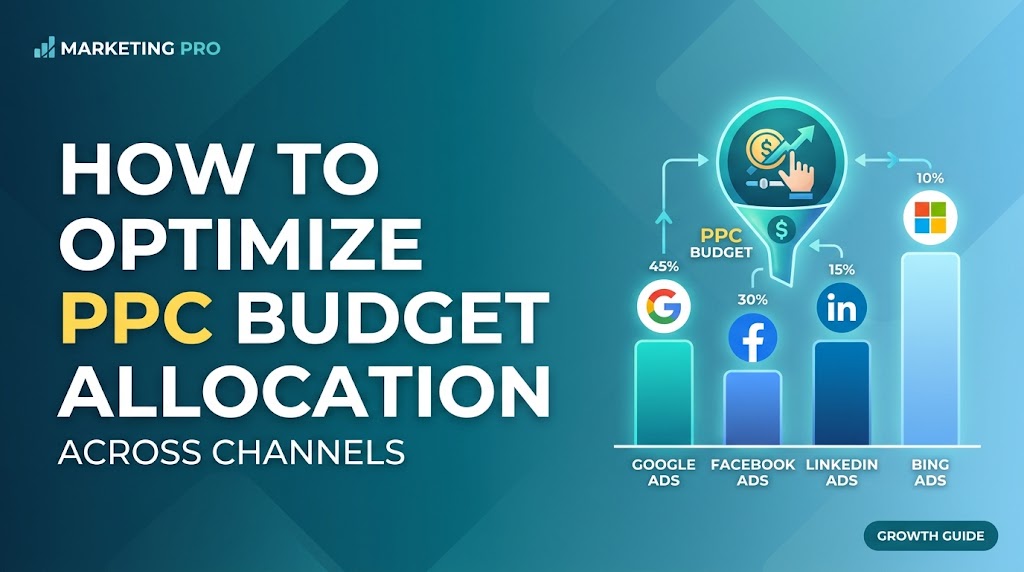
Every dollar spent on digital advertising carries the weight of expectations: higher conversion rates, lower Acquisition Costs (CAC), and stronger Return on Ad Spend (ROAS). Yet, modern media buying is no longer as simple as pumping funds into a single, reliable channel like Google Search and watching revenue roll in.
Today’s digital marketing ecosystem is fragmented. Consumers move fluidly between searching for intent-driven solutions on Google, discovering brands visually on Meta (Facebook and Instagram), evaluating B2B services on LinkedIn, and exploring trends on TikTok.
For growth leads and performance marketers, this multi-channel reality presents a critical challenge: How do you distribute your ad spend to maximize total cross-channel revenue without wasting budget on underperforming channels?
Arbitrary budget splits—such as the arbitrary “50% Google / 50% Meta” rule—lead to missed opportunities, channel cannibalization, and inflated customer acquisition costs. To outperform the competition, you need a data-driven, strategic framework for cross-channel PPC allocation.
In this comprehensive guide, we will break down the exact models, metrics, and execution steps required to balance, optimize, and scale your media buying budget effectively across channels.
The Cross-Channel PPC Ecosystem: Channel Roles & Dynamics
Before allocating a single dollar, you must categorize your ad channels by their primary objective in the conversion funnel. Expecting Meta Ads to generate immediate high-intent conversions at the same efficiency as Google Brand Search is a fundamental strategic flaw.
1. High-Intent Demand Capture (Bottom of the Funnel)
These platforms target users actively searching for solutions to specific problems. The buying intent is explicit, making conversion rates high and sales cycles short.
-
Primary Channels: Google Search, Bing Search, High-Intent Keywords.
-
Targeting Strategy: Exact and Phrase Match keywords, competitor conquesting, problem-specific queries.
-
Primary Metric: Cost Per Acquisition (CPA), Direct ROAS.
2. Demand Generation & Discovery (Middle/Top of the Funnel)
These platforms introduce your product or service to users who match your Ideal Customer Profile (ICP) but are not actively seeking your brand at this exact moment.
-
Primary Channels: Meta Ads, YouTube Ads, TikTok Ads, Pinterest Ads.
-
Targeting Strategy: Lookalike audiences, broad interest-based targeting, contextual placements.
-
Primary Metric: Cost Per Lead (CPL), Click-Through Rate (CTR), Assisted Conversions, Cost Per Mille (CPM).
3. Professional & High-LTV Targeted Channels (Account-Based Marketing)
These channels excel when buyer qualification is strict and Customer Lifetime Value (LTV) is high enough to justify higher upfront Acquisition Costs.
-
Primary Channels: LinkedIn Ads, programmatic ABM platforms (Terminus, Demandbase).
-
Targeting Strategy: Job title, industry, company size, seniority, targeted account lists.
-
Primary Metric: Qualified Pipeline Value, Cost Per Qualified Lead (CPQL).
          FUNNEL STAGE            PRIMARY CHANNELS            CORE OBJECTIVE
    ┌──────────────────────────┐┌───────────────────┐┌─────────────────────────────┐
    │  Top / Middle Funnel     ││ Meta, YouTube,    ││ Build Brand Awareness,      │
    │  (Demand Generation)     ││ TikTok, Pinterest ││ Capture Cold Audience Interest│
    └────────────┬─────────────┘└─────────┬─────────┘└──────────────┬──────────────┘
                 │                        │                         │
                 ▼                        ▼                         ▼
    ┌──────────────────────────┐┌───────────────────┐┌─────────────────────────────┐
    │  Bottom of Funnel        ││ Google Search,    ││ Convert Active High-Intent  │
    │  (Demand Capture)        ││ Bing Search       ││ Prospects into Buyers       │
    └────────────┬─────────────┘└─────────┬─────────┘└──────────────┬──────────────┘
                 │                        │                         │
                 ▼                        ▼                         ▼
    ┌──────────────────────────┐┌───────────────────┐┌─────────────────────────────┐
    │  Retargeting & Nurturing ││ Meta, Display,    ││ Re-engage Warm Visitors &   │
    │  (Retention/Closing)     ││ LinkedIn          ││ Close Friction-Heavy Deals  │
    └──────────────────────────┘└───────────────────┘└─────────────────────────────┘
Key Takeaway: Never compare raw ROAS directly between demand generation (e.g., Meta/TikTok) and demand capture (e.g., Google Search). Demand capture extracts existing market interest, whereas demand generation creates the pipeline that makes search campaigns scalable over time.
Core Allocation Frameworks: How to Split Your Ad Spend
Choosing how to split your budget depends on your market maturity, budget size, and business model (e.g., B2B SaaS vs. D2C E-commerce). Here are three battle-tested frameworks for PPC budget allocation.
Framework 1: The 70/20/10 Innovation Rule
This approach balances consistent efficiency with strategic growth and experiment-driven learning.
       [ 70% Core Scaled Channels ] ────── Proven High-ROI Performers
       [ 20% Growth & Expansion   ] ────── Emerging / Secondary Channels
       [ 10% Experimental Alpha   ] ────── High-Risk, Novel Platforms
-
70% Core Performers (Scale): Invest the majority of your budget into your proven, high-ROI channels (e.g., Google Search and Meta). These campaigns must maintain predictable efficiency.
-
20% Growth Channels (Expansion): Allocate 20% to scaling secondary channels that show high promise but require further tuning (e.g., expanding into YouTube Ads or LinkedIn Sponsored Content).
-
10% Experimental Alpha (Testing): Dedicate 10% to testing new platforms, ad formats, or audience segments (e.g., Reddit Ads, TikTok Shop Ads, AI-powered ad networks).
Framework 2: The Funnel-Based Allocation Split (60 / 30 / 10)
Ideal for growing brands seeking sustained long-term growth by keeping the top-of-funnel pipeline full.
-
60% Demand Generation (Top & Middle Funnel): Meta, TikTok, YouTube Ads driving broad awareness, video views, and discovery traffic.
-
30% Demand Capture (Bottom Funnel): Google Search and Bing Search covering high-intent commercial and transactional queries.
-
10% Retargeting & Nurturing: Cross-channel retargeting (Meta, Display, LinkedIn) designed to recapture unconverted landing page visitors.
Framework 3: Marginal ROI (Incremental Scale Framework)
For advanced advertisers spending $50,000+ per month, budget should be allocated dynamically based on Marginal Return on Investment rather than fixed percentage splits.
Instead of looking at blended ROAS, you measure the return generated by the next incremental dollar spent on each channel.
Pro Tip: When a primary channel (like Google Search for broad match keywords) reaches its point of diminishing returns—where adding another $1,000 increases CAC beyond your target threshold—immediately reallocate that incremental budget to your next most efficient channel (e.g., Meta Advantage+ Shopping).
Step-by-Step Execution: Dynamic PPC Budget Optimization
Step 1: Establish Baseline Metrics & Channel CAC Benchmarks
Before shifting funds across channels, determine baseline performance over a 60- to 90-day historical window. Calculate your Fully Loaded Customer Acquisition Cost (CAC) and Customer Lifetime Value (LTV) for each channel independently.
| Channel | Monthly Spend | Conversions | Direct CAC | LTV (Est.) | LTV:CAC Ratio |
| Google Search | $25,000 | 250 | $100 | $400 | 4:1 |
| Meta Ads | $20,000 | 160 | $125 | $375 | 3:1 |
| LinkedIn Ads | $10,000 | 40 | $250 | $1,250 | 5:1 |
| TikTok Ads | $5,000 | 35 | $142 | $300 | 2.1:1 |
Step 2: Implement Multi-Touch Attribution & Marketing Mix Modeling (MMM)
Relying strictly on last-click attribution will cause you to underfund discovery channels (Meta, TikTok, YouTube) and overspend on branded search campaigns.
To solve this attribution challenge:
-
Track Assisted Conversions: Use Google Analytics 4 (GA4) or dedicated attribution software (e.g., Triple Whale, Northbeam, Rockerbox) to measure how social impressions fuel organic search volume and branded search traffic.
-
Conduct Geo-Lift Tests: Turn off ad spend in specific geographic test regions for 2–4 weeks to measure the actual incremental lift in total sales when advertising on platforms like Meta or YouTube.
-
Monitor Blended Metrics: Track your MER (Marketing Efficiency Ratio) calculated as:
$$\text{MER} = \frac{\text{Total Revenue}}{\text{Total Ad Spend Across All Channels}}$$
Step 3: Identify & Calculate Points of Diminishing Returns
Every ad platform has an efficiency curve. As spend increases within a fixed targeting pool, Cost Per Click (CPC) rises and conversion rates soften.
       High ROI │   * (Optimal Efficiency Phase)
                │     \
                │      \
                │       * ─── Point of Diminishing Returns
       Low ROI  │          \  (CAC Escalates Sharply)
                └─────────────────────────────
                Low Spend ──────────► High Spend
How to calculate your channel cap:
-
Increase weekly budget on Channel A by 15–20%.
-
Monitor key efficiency markers: Impression Share, Frequency, and Incremental CAC.
-
If Incremental CAC rises more than 25% above target while Impression Share exceeds 80%, the campaign is approaching saturation.
-
Shift the next budget increment to a complementary secondary channel.
Step 4: Implement Dynamic Reallocation Triggers
Set rigid rules within your media management workflows to automatically pivot budgets weekly or bi-weekly based on clear KPI thresholds:
-
Trigger 1 (Scale): If Channel A’s rolling 7-day CPA is >15% below target and Impression Share is <60%, increase channel budget by 15%.
-
Trigger 2 (Pivot): If Channel B’s rolling 7-day CPA exceeds target threshold by 25% for 5 consecutive days, reduce channel budget by 20% and redistribute funds to the top-performing campaign in Channel A.
-
Trigger 3 (Creative Fatigue): If Meta Ad frequency exceeds 4.5 and CTR drops by 30%, freeze budget growth on that ad set until fresh creative assets are deployed.
Example Application: A B2B SaaS company spending $60,000/month notices that their LinkedIn Ads CPA spiked from $200 to $340 after exhausting their primary job-title target list. Instead of continuing to push spend into LinkedIn, they trigger an immediate 30% budget shift ($6,000) into Google Search intent campaigns targeting long-tail problem keywords. Concurrently, they reallocate another $2,000 to Meta retargeting campaigns to convert historical LinkedIn traffic. The result: Blended CAC stabilizes back within target limits ($210) within 14 days.
Avoiding Pitfalls: The Top 5 PPC Budgeting Mistakes
1. Over-Investing in Branded Search
Branded search campaigns often showcase high ROAS (e.g., 10x–20x), giving performance teams a false sense of security. However, much of this traffic is high-intent organic demand that would convert regardless of paid search ads.
-
The Fix: Isolate branded search from non-branded search budgets. Cap branded search spend at the precise amount needed to protect your brand name from competitor conquesting, and allocate remaining performance dollars to acquiring new non-branded traffic.
2. Siloed Channel Management
Evaluating ad channels in isolation creates severe misallocations. Cutting spend on Meta because its direct last-click ROAS looks weak often causes a downstream collapse in Google Search query volumes and direct site traffic.
-
The Fix: Evaluate channel health using blended performance (MER) alongside multi-touch attribution views to preserve top-of-funnel discovery pipelines.
3. Scaling Budget Faster Than Algorithmic Learning
Modern platforms like Google (Performance Max, Smart Bidding) and Meta (Advantage+) rely on machine learning algorithms. Increasing daily ad spend by 50–100% overnight resets campaign learning phases, leading to volatile CPMs and degraded ad delivery.
-
The Fix: Limit budget adjustments to 15–20% every 3 to 4 days to keep bidding algorithms inside their optimal learning windows.
4. Ignoring Creative Refresh Cycles in Spend Calculations
Increasing ad spend without scaling creative production leads to rapid creative fatigue. High budget levels combined with stagnant ad creative result in surging CPMs, falling CTRs, and wasted spend.
-
The Fix: Tie budget allocation directly to creative output. For every $10,000 in monthly Meta or TikTok spend, ensure your creative team deploys 3 to 5 new creative variations (hook, visual asset, copy) per month.
5. Neglecting Seasonal Bidding Fluctuation
Media costs (CPMs) fluctuate significantly during peak commercial windows (e.g., Q4 Cyber Week or industry-specific buying cycles). Running fixed baseline budgets during high-CPM periods can shrink real ad reach and lower overall ROI.
-
The Fix: Reserve 15–20% of your annual budget in a flex pool. Inject these reserves strategically during peak demand cycles when conversion rates are highest, or pull back during seasonally slow periods to preserve capital.
Advanced Strategies: Cross-Channel Budget Optimization
Strategy 1: The Google-Meta Synergy Loop
Use social discovery platforms to generate low-cost demand, then capture that interest on Google Search using non-branded intent keywords.
┌────────────────────────────────┐     ┌────────────────────────────────┐
│   Meta / TikTok Discovery      │ ──► │  Google Non-Branded Search     │
│   Creates Broad Demand & Interest   │     │  Captures Search Intent Lift   │
└────────────────────────────────┘     └────────────────────────────────┘
                 │                                      │
                 └───────────────────┬──────────────────┘
                                     ▼
                       ┌──────────────────────────┐
                       │ Cross-Channel Conversion │
                       └──────────────────────────┘
-
Launch engaging video ads on Meta targeting broad prospective interest groups.
-
Track lift in specific non-branded search query volume on Google Ads.
-
Automatically raise Google Search daily budgets during top-performing social campaign launches to ensure 100% search impression share on high-converting non-branded search phrases.
Strategy 2: Dynamic Bidding Based on Inventory/Margin Data
For e-commerce and retail brands, align campaign ad budgets directly with live margin profiles and inventory availability via automated scripts or custom API integrations.
-
High-Margin Product Categories: Allocate higher target CACs and expanded PPC budgets.
-
Low-Stock Items: Automatically pause or scale down ad spend on specific campaigns when product inventory drops below critical thresholds to prevent wasted click costs on out-of-stock SKUs.
Frequently Asked Questions (FAQ)
How often should I reallocate ad spend across PPC channels?
Minor budget shifts (10–15%) between ads and campaigns within a channel can happen weekly. Major cross-channel reallocations should occur on a bi-weekly or monthly basis. This gives platform machine learning algorithms sufficient conversion data (typically 30–50 conversion events per week) to stabilize performance before evaluating trends.
What is a good benchmark for spending split between Google Ads and Meta Ads?
For standard D2C e-commerce brands, a common benchmark is 55% Meta Ads / 45% Google Ads. For B2B companies, the typical baseline split leans toward 50% Google Search / 30% LinkedIn Ads / 20% Meta Ads. However, exact allocation must be customized to your brand’s specific Customer Lifetime Value (LTV) and sales cycle duration.
How do I know when a PPC channel is fully saturated?
A channel is approaching saturation when:
-
Impression Share exceeds 75–80%.
-
Frequency metrics rise significantly (e.g., >4.0 over a 7-day window on Meta).
-
Incremental CAC increases continuously despite deploying fresh ad copy and creatives. When these conditions are met, reallocate additional growth capital into secondary channels.
Should I allocate PPC budget to retargeting campaigns?
Yes, but retargeting budgets should typically consume no more than 5–15% of your total ad spend. Over-investing in retargeting spends capital converting buyers who likely would have returned organically. Focus the vast majority (85–90%) of your budget on cold prospecting and demand capture.
Action Plan: Maximizing Your Next Quarter’s PPC Ad Spend
Optimizing cross-channel PPC budget allocation isn’t a one-time project—it’s a continuous cycle of testing, measuring, and rebalancing. By shifting your approach from isolated channel silos to a unified portfolio strategy, you can maximize acquisition efficiency and protect your paid media programs against diminishing returns.

I’m Md Nasir Uddin, a digital marketing consultant with over 9 years of experience helping businesses grow through strategic and data-driven marketing. As the founder of Macroter, my goal is to provide businesses with innovative solutions that lead to measurable results. Therefore, I’m passionate about staying ahead of industry trends and helping businesses thrive in the digital landscape. Let’s work together to take your marketing efforts to the next level.